10 Best slatwall
From leading brands and best sellers available on the web.By clicking on a link to a third party's website, log data is shared with that third party.
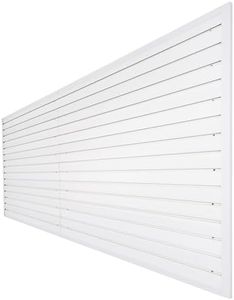
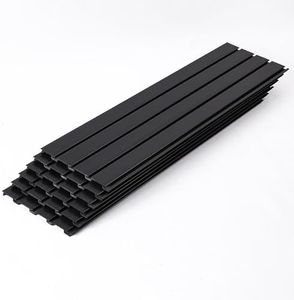
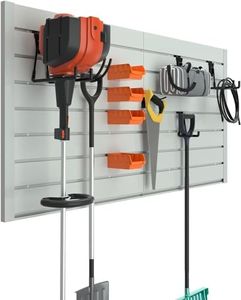
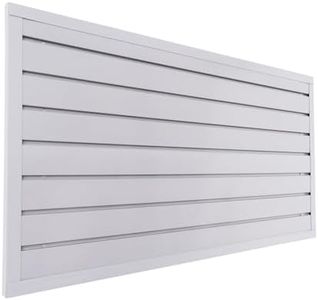
Related Products
Up to 11% off


Buying Guide for the Best slatwall
When picking a slatwall system, the main goal is to create flexible, organized storage or display space that suits your needs. Slatwall panels are a popular choice in garages, retail stores, workshops, and even home offices because they allow you to easily rearrange hooks, shelves, and bins as your needs change. To get the best fit, it’s important to understand the materials, sizes, weight capacities, and installation options involved. Focusing on these features will help you select a slatwall solution that is both durable and versatile for your specific space.MaterialMaterial refers to what the slatwall panel is made from, such as MDF (medium-density fiberboard), PVC (plastic), or metal. This is important because it affects how durable, moisture-resistant, and strong your slatwall will be. MDF is commonly used and is sturdy enough for most retail or home uses, but may not be the best in damp environments. PVC panels are lightweight, resistant to moisture, and good for garages or damp spaces. Metal slatwalls are extremely strong and usually chosen for heavy-duty needs. If you need to hang heavy tools, choose metal; for general household or light-to-moderate use, MDF or PVC may suffice.
Panel SizePanel size means the measurements of each slatwall board. This matters because it affects how much wall surface you can cover and how many accessories you can attach. Common sizes are 4x8 feet, but there are smaller and larger options. Larger panels cover big areas quickly—ideal for large garage walls or store spaces. Smaller panels or pre-cut sections work well for tight spaces or if you want more customized design. To decide, measure your wall area and pick panel sizes that minimize cuts and seams for a neat, efficient installation.
Groove SpacingGroove spacing is the distance between the horizontal slots (grooves) where accessories are inserted. This spec is important because it affects what kinds of hooks, bins, or shelves you can use and how closely you can place them. Standard spacing is typically 3 inches apart, which works well for most needs, but some slatwall panels have tighter or wider spacing. If you need to hang small items close together, tighter spacing is useful; for bigger, bulkier items, standard or wider spacing is enough. Consider what you plan to hang most frequently to choose the spacing.
Weight CapacityWeight capacity is a measure of how much weight the panel and each individual groove can safely support. It matters because overloading a slatwall could cause damage or accidents. Manufacturers usually specify a weight rating per linear foot of groove. For hand tools, lightweight items, or retail displays, most slatwall panels will be adequate. For heavier objects like power tools or sports equipment, check for higher-rated panels and install them securely into wall studs for maximum support.
Finish and ColorFinish and color refer to the appearance and coating of the panels. This is important for matching your existing decor, preventing wear, and making your space look tidy. Slatwall can come in raw, painted, or laminated finishes, and a range of colors or wood tones. If aesthetics matter, pick a finish that complements your space and is easy to wipe clean. If appearance is less important, a basic or utility finish may suffice, but avoid unfinished wood in places where moisture is a concern.
Accessory CompatibilityAccessory compatibility means which hooks, baskets, bins, and shelves will fit into the grooves of your chosen slatwall. Some panels have proprietary sizes or restrictions, while others are standardized. This is important because it determines how much choice you have in organizing. If you already own accessories, check their fit. If not, consider whether you want the flexibility to buy a wide variety of add-ons from different brands. Look for 'universal' slatwall or make sure the panel’s groove dimensions match available accessories.
Installation MethodInstallation method describes how the slatwall is attached to your wall. Some panels are simple screw-on designs, while others require special mounting strips or brackets. This matters because it affects the stability, safety, and permanence of your installation. If you’re mounting heavy items, make sure panels are attached directly to wall studs. For lighter storage or temporary setups, surface mounting over drywall may suffice. Consider your DIY skills and whether you may want to move the panels later, and choose an installation method accordingly.