10 Best Slicing Knives
From leading brands and best sellers available on the web.By clicking on a link to a third party's website, log data is shared with that third party.


Related Products
Up to 58% off

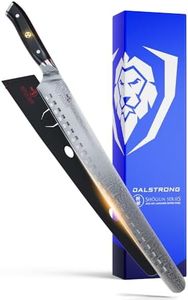
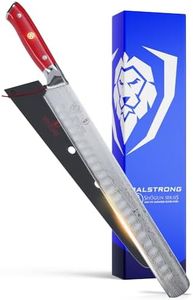

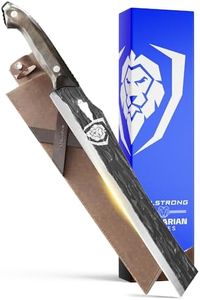

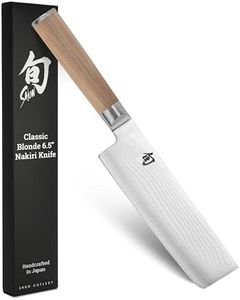
Buying Guide for the Best Slicing Knives
When choosing a slicing knife, it's important to remember that the right tool can improve your efficiency and precision in the kitchen, especially when cutting meats, roasts, and bread. Instead of just picking the first knife you see, you should match its design and features with your typical cooking habits and the types of food you prepare most often. Understanding the key specifications will help you make a confident, informed choice.Blade LengthBlade length is the measurement of the cutting edge of the knife, usually given in inches or centimeters. This is important because a longer blade allows for smoother and more continuous slicing motions, which is particularly useful for large items like roasts and briskets. Typical slicing knives range from 8 to 14 inches. Shorter blades (8-10 inches) are easier to control but less suitable for cutting larger items in a single stroke, while longer blades (12-14 inches) are designed for big cuts but may be more challenging for beginners. Consider what you plan to slice most often—choose a shorter blade for everyday kitchen tasks or a longer one for large meats and delicate presentation.
Blade FlexibilityBlade flexibility refers to how easily the knife bends when you apply gentle pressure. A more flexible blade can help when carving around bones or making very thin slices. Stiffer blades are better for more precise, straight cuts and for slicing denser items. If you often slice fish or soft meats, a flexible blade may suit you best, while stiffer blades work well for brisket, ham, or bread.
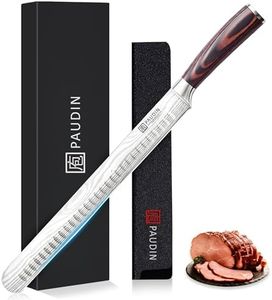
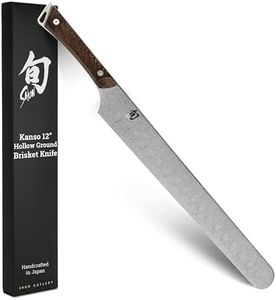
Blade EdgeSlicing knives commonly have either a straight (plain) edge or a Granton (dimpled) edge. A straight edge gives clean cuts and is easier to sharpen, while a Granton edge reduces friction and helps prevent food from sticking to the blade. If you want neat, presentation-ready slices, or routinely cut moist or sticky foods, a Granton edge might be more helpful, while a straight edge is suitable for general use.
Blade MaterialBlade material affects sharpness, durability, and maintenance needs. Most slicing knives are made from stainless steel, which resists rust and is easy to care for. High-carbon steel offers a sharper edge but can stain if not properly maintained. If you prefer easy maintenance, stick with stainless steel. For the sharpest, finest edge and don't mind extra care, high-carbon steel may be right for you.
Handle Comfort and MaterialHandle comfort is crucial because you'll have better control and reduced fatigue with an ergonomic grip. Handles are typically made from wood, plastic, or composite materials. Wood offers a traditional feel but needs a bit more care; plastic and composite materials are more resistant to moisture and easier to clean. Choose a handle that feels comfortable in your hand and suits how often you anticipate using the knife.
Weight and BalanceWeight and balance refer to how heavy the knife feels and how evenly the weight is distributed between the handle and blade. A lighter knife offers agility and is good for long slicing jobs, while a heavier knife can give you more cutting power. The right balance is subjective and can be checked by holding the knife to see if it feels stable and easy to control. Pick a weight and balance that matches your strength and comfort for better control.