10 Best Soaking Bathtubs
From leading brands and best sellers available on the web.By clicking on a link to a third party's website, log data is shared with that third party.
Related Products


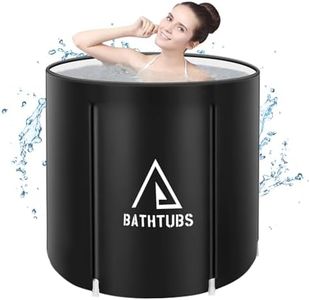
Buying Guide for the Best Soaking Bathtubs
Choosing the right soaking bathtub can greatly enhance your relaxation and bathing experience at home. While there are many options available, focusing on your personal comfort, bathroom space, bathing habits, and the structural requirements of your home will help you make the best choice. Take some time to consider what you want from a tub—whether it’s a quick daily soak or a spa-like retreat—and understand the important features that will give you the most enjoyable experience.Size and DimensionsThis refers both to the overall length, width, and depth of the bathtub as well as its capacity in gallons or liters. Size is important because it determines how comfortably you can stretch out, how much water you'll use, and whether it will fit in your bathroom. Tubs come in compact, medium, and extra-large sizes. Compact tubs (usually less than 60 inches long) are good for small spaces or for those who don’t mind sitting upright. Medium tubs (around 60-72 inches) provide a balance for average bathroom spaces and offer good soaking depth. Extra-large tubs (over 72 inches) are great for those who want to fully stretch out or bathe together. To pick the right size, consider your height, your space, and whether you want your whole body submerged while soaking.
Soaking DepthThis is how deep the water can be when the tub is filled to capacity. A deeper tub offers a more immersive soak and helps relieve tension, but it also uses more water. Shallower tubs (under 15 inches) suffice for standard baths but may not cover your shoulders. Medium-depth tubs (15-20 inches) are common and usually allow a full-body soak for most people. Deep soaking tubs (over 20 inches) provide the most luxurious soak, allowing you to be fully submerged. Choose a depth based on how you prefer to relax in the tub—if you want a truly enveloping, spa-like experience, opt for a deeper tub.
MaterialBathtubs are made from various materials, such as acrylic, fiberglass, cast iron, stone resin, and more. The material affects the tub’s weight, heat retention, durability, and feel. Lightweight options like acrylic and fiberglass are easy to install and affordable but may scratch more easily. Cast iron and stone resin retain heat well, offering longer warm baths, but are heavier and may require floor reinforcement. Your choice should depend on whether you value warmth, durability, or ease of installation. Think about your priorities (such as keeping water hot longer versus the ease of putting the tub in an upstairs bathroom) when selecting material.
Installation TypeSoaking tubs come in several installation types, including freestanding, alcove, drop-in, or walk-in designs. Freestanding tubs can be placed anywhere and make a bold design statement, while alcove tubs fit snugly between three walls and are great for saving space. Drop-in tubs require a frame and can be surrounded by custom tile or decking, allowing for design flexibility. Walk-in tubs are ideal for those who need easier access due to mobility issues. You should pick the installation type that matches your bathroom layout and your personal taste in design, as well as any mobility needs.
Ergonomics and Comfort FeaturesThis includes the shape of the tub (oval, rectangular, slipper, etc.), contoured backs, built-in armrests, and headrests. These features affect how comfortably you can recline, soak, or relax in the tub for extended periods. Oval and slipper tubs are popular for lounging, while rectangular tubs may offer more sitting space. Contoured and ergonomic shapes provide more back support. Consider how you like to relax—lying back or sitting upright—and if you want extra-padded areas when choosing comfort features.
WeightThe empty weight of the tub is essential because it determines whether your bathroom floor can support it, especially when filled with water and with someone inside. Lightweight tubs are easier to install in any home, while heavier tubs like cast iron may need structural reinforcement. Take into account the weight if you’re installing the tub on an upper floor, or if your home has older flooring.