10 Best Soft Crates For Dogs
From leading brands and best sellers available on the web.By clicking on a link to a third party's website, log data is shared with that third party.
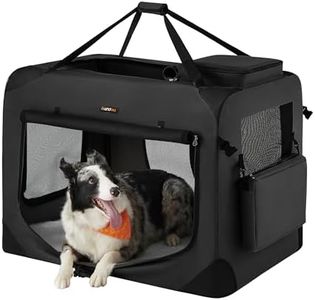
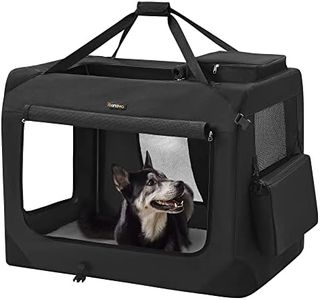
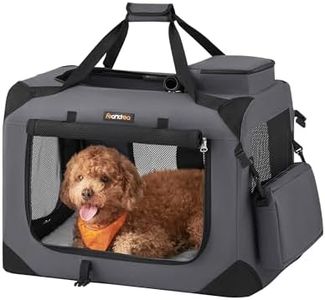
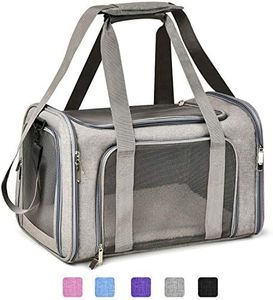

Related Products
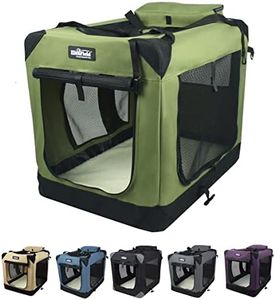
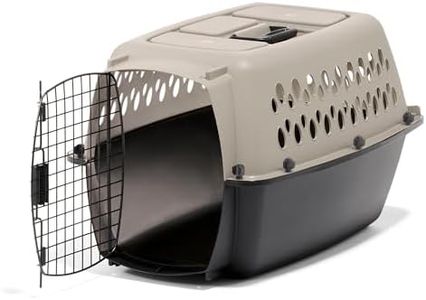
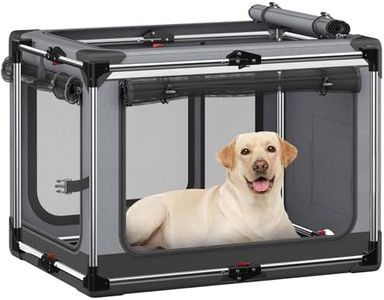
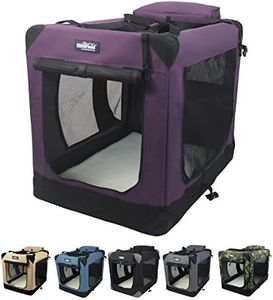
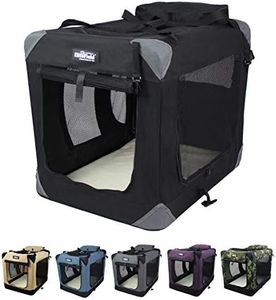

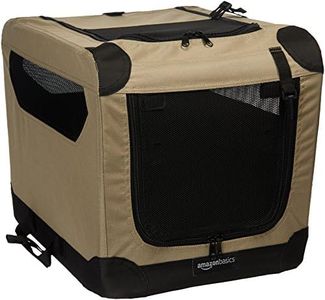
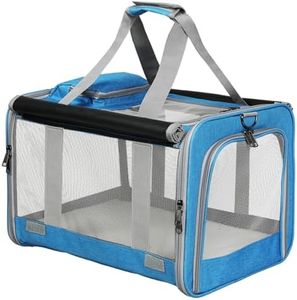
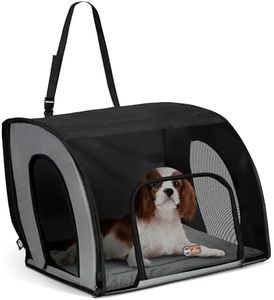
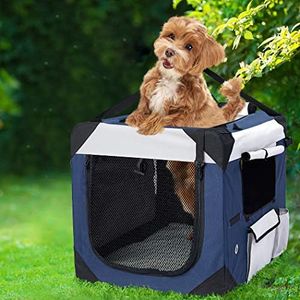
Buying Guide for the Best Soft Crates For Dogs
Soft crates for dogs are portable, lightweight enclosures made primarily from fabric and mesh, designed to create a safe, comfortable, and familiar environment for your pet. They’re handy for travel, home use, or temporary containment, but with so many options available, it's important to understand which features matter most so you can pick a crate that best suits both your dog’s needs and your lifestyle.SizeSize refers to the overall dimensions of the crate—its length, width, and height. This is crucial because your dog needs enough space to stand up, turn around, and lie down comfortably. Crates are usually sized according to weight/size guidelines, but you should also measure your dog from nose to tail and from the floor to the top of their head (or ears if upright) to ensure a good fit. Puppies may need a crate with a divider panel to accommodate their growth, while adult dogs need a crate tailored to their current size. Always choose the crate that matches your dog’s measurements, not just their breed or estimated weight.
Frame MaterialThe frame material provides the structure for the crate and is commonly made from steel, aluminum, or durable plastic. Steel frames are sturdier and better for active or strong dogs, while lighter materials may be easier to carry but less durable. If your dog tends to chew or push on crates, a stronger frame is important for safety and longevity. For mellow or small dogs, a lightweight frame may be sufficient and offer easier portability.
Fabric QualityFabric quality pertains to the thickness and durability of the soft crate’s outer materials, often made from polyester, nylon, or canvas. Higher-denier fabrics are tougher and resist tearing—crucial for dogs prone to scratching or digging. Mesh panels should also be reinforced. If your dog is calm or only uses the crate occasionally, lighter fabric could work; for regular use or more energetic dogs, opt for the sturdiest, rip-resistant material you can find.
VentilationVentilation refers to the amount and placement of mesh windows or openings. Good airflow keeps your dog comfortable, reduces odors, and helps prevent overheating, especially in warm environments. Some crates offer ventilation on two sides, while others have three or even full mesh coverage. If you live in a hot climate or plan to use the crate outdoors, more mesh and larger windows are best. For colder environments, limited mesh can hold warmth better.
Access Points/DoorsAccess points are the zippered doors or flaps that allow your dog to enter and exit the crate. Crates may have one, two, or even three access doors (front, side, top). More doors can make loading easier and allow you to configure the crate in different spaces. If you plan to travel often or squeeze the crate into a car, multiple doors offer more flexibility. For basic home use, a single front door might suffice.
Portability & WeightPortability and weight refer to how easily the crate can be carried or moved. Lightweight crates are easier to travel with, set up, and store, but may sacrifice a bit in terms of sturdiness. Some fold flat for transport, have carrying handles or bags, and weigh substantially less than heavy-duty types. If you move the crate frequently, or plan to use it for travel or outdoors, prioritize a lighter and more portable design. If it will mostly stay in one place, weight is less of a concern.
Ease of CleaningEase of cleaning focuses on how simple it is to remove hair, dirt, or accidents from the crate. Removable and washable fabric covers and waterproof bottoms are features to look for here. If your dog is young, prone to accidents, or sheds a lot, this is especially important—choose models with machine-washable fabrics and easy-to-clean surfaces. For occasional use or well-trained dogs, basic cleaning features may be sufficient.
StabilityStability means how well the crate stays put and resists being tipped over or moved by your dog. Some crates have slip-resistant bases or anchor points. If your dog is energetic, likes to jump, or will be using the crate outdoors where the ground can be uneven, a stable design is vital. For gentler dogs or indoor use on flat surfaces, basic stability might be enough.