10 Best Soil Contamination Test Kits
From leading brands and best sellers available on the web.By clicking on a link to a third party's website, log data is shared with that third party.
Related Products



Buying Guide for the Best Soil Contamination Test Kits
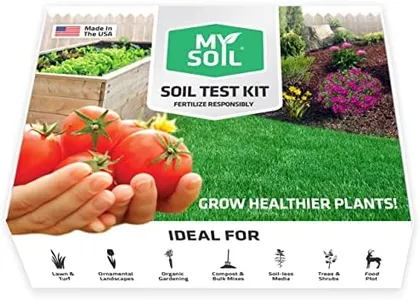
Choosing the right soil contamination test kit is important if you're concerned about the health of your soil, whether it's for gardening, landscaping, or ensuring a safe play area for children and pets. The key is to understand what contaminants might be present, how easy the kit is to use, and the accuracy and detail of the results provided. Before deciding, it's helpful to know what you want to test for and how you'll use the information, such as checking for heavy metals, pesticides, or overall soil health.Types of Contaminants DetectedThis refers to the specific harmful substances the test kit is capable of detecting in the soil, such as lead, arsenic, mercury, pesticides, or petroleum residues. This is important because not all soil contamination test kits are designed to detect every kind of contaminant. To choose wisely, think about your main concerns: are you worried about heavy metals from old paint, or agricultural chemicals from prior land use? Some kits only cover a few contaminants, suitable for general peace of mind, while others are more comprehensive, good for detailed soil analysis in sensitive areas like playgrounds or edible gardens.
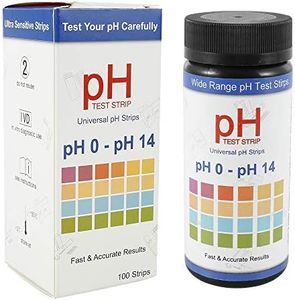
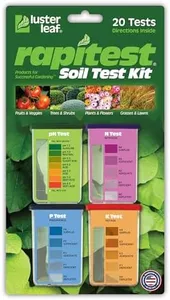
Testing MethodSoil test kits use different methods to indicate the presence and concentration of contaminants. Some are DIY with color-change strips or solutions, while others require you to collect soil samples and mail them to a lab for analysis. DIY kits are usually quick and convenient, offering immediate results at home, but may be less sensitive or accurate. Lab-based analysis, on the other hand, is more detailed and dependable but takes longer and involves shipping. Think about your comfort level, urgency, and how precise you need the results to be when deciding.
Number of Tests/Uses per KitThis spec describes how many soil samples you can test with one kit. Some kits are single-use, ideal for checking one area, while others allow for multiple tests across different spots, which is useful if you have a large garden or several areas of concern. If you need an overview of your whole property, a multi-use kit is more practical. For a small spot or one-time check, a single-use kit might suffice.
Sensitivity and Detection LimitsSensitivity relates to the lowest concentration of a contaminant the kit can identify, often expressed in parts per million (ppm) or similar units. A more sensitive kit can detect very low levels of contamination, which is especially important if you plan to grow food for consumption or if children will play in the soil. If your aim is just to flag major concerns, lower sensitivity (higher detection limit) might be acceptable. But for safety-critical uses, look for kits with more precision and the ability to pick up smaller traces.
Ease of UseThis considers how simple the kit is to operate, including instructions, the steps involved, and the clarity of results. Some kits are straightforward, using color charts or indicator papers that are easy for almost anyone to interpret. Others may involve more complicated procedures or require some basic understanding of chemistry. If you prefer minimal hassle, look for intuitive kits with clear instructions. If you don't mind following detailed protocols for more comprehensive and reliable results, more complex kits might suit you.
Result Turnaround TimeThis spec indicates how quickly you’ll get your answers. Home kits provide results in minutes to an hour, suitable if you want immediate answers. Kits that require lab analysis might take several days to a couple of weeks, but often provide more detailed reports. Choose a turnaround time that fits your needs—swift for quick checks, or slower and more thorough for official assessments or peace of mind before making decisions.