10 Best Soils For Succulents
From leading brands and best sellers available on the web.By clicking on a link to a third party's website, log data is shared with that third party.
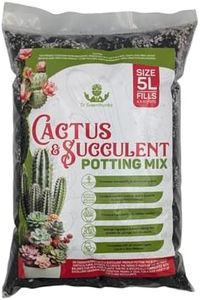
Related Products
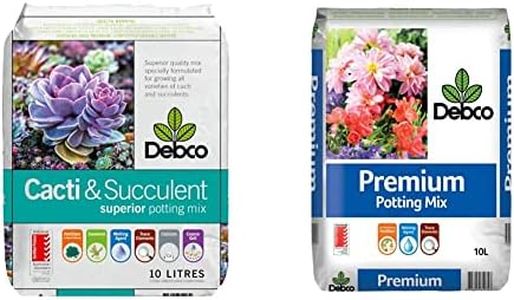
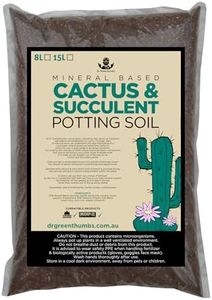
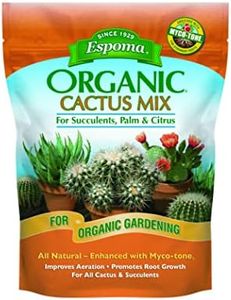
Buying Guide for the Best Soils For Succulents
Choosing the right soil for succulents is essential because these plants thrive in conditions that mimic their natural, dry environments. The right soil ensures good drainage, prevents root rot, and supports healthy growth. When shopping for soil, knowing what characteristics to look for will help you provide your succulents the best possible foundation.Drainage AbilityDrainage ability refers to how quickly water moves through the soil and away from the roots. This is crucial for succulents because they are sensitive to overwatering and root rot. Soils with high drainage are often gritty and include particles like sand or gravel. If the soil retains too much moisture, it’s best for moisture-loving plants but not for succulents. Aim for a soil that water passes through quickly. If your pot tends to stay soggy, you need soil with better drainage. If your environment is extremely dry, a moderately draining soil with slightly more organic matter can work, but excellent drainage is almost always the safest bet.
Texture and Particle SizeTexture and particle size refer to how coarse or fine the components of the soil are. Larger, gritty particles like perlite, pumice, or coarse sand are ideal for succulents, while fine particles like clay or silt should be avoided. The more coarse the texture, the better the airflow around roots and the less water is held, which is beneficial for succulents. If you grow your plants indoors or in humid climates, go for a coarse, gritty mix. If your conditions are dry or very hot, a mix with some finer particles can help retain just a little more moisture, but never go for an entirely fine or dense soil.
Organic vs. Inorganic ContentOrganic content includes components like peat, compost, or coconut coir, while inorganic content includes perlite, pumice, sand, or gravel. High organic content soils hold moisture, which succulents generally don’t need. Inorganic-heavy soils help water drain quickly. A balance is important, but for succulents, the scale should tip toward more inorganic material. If your succulent mix feels dark, heavy, or sticks together when wet, it’s likely too organic. Aim for a mix that feels light and crumbly, with most of its volume from inorganic particles.
pH LevelSoil pH determines how acidic or alkaline the soil is. Most succulents prefer slightly acidic to neutral soil, typically in a range from 6.0 to 7.0. This helps ensure nutrients are available to the plants without damaging roots. If you have unusually hard tap water or are unsure, starting with a mix in the specified pH range is safest. Most commercial succulent soils are formulated to fall within this safe pH, but if you notice poor growth, testing and adjusting pH may help.
Nutrient ContentNutrient content describes how much nutrition is available for your succulents in the soil. Succulents don’t need rich soil; in fact, too much fertility can cause weak, leggy growth or even harm the plant. A basic succulent mix should have minimal organic fertilizer content. If the plants seem pale or grow very slowly over time, you can supplement with occasional light feeding, but initial soil shouldn’t be rich. Choose soil with modest, slow-release nutrition tailored for slow-growing plants.