10 Best Solar Fairy Lights
From leading brands and best sellers available on the web.By clicking on a link to a third party's website, log data is shared with that third party.
Related Products
Up to 20% off


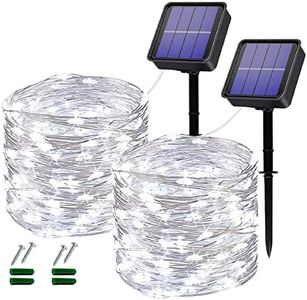
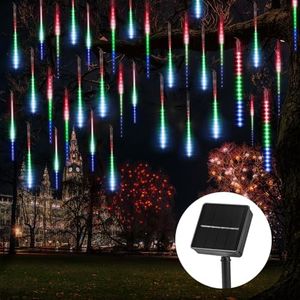
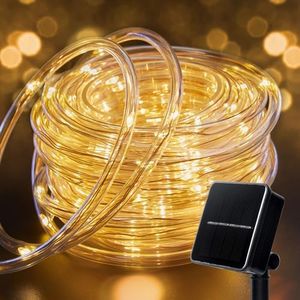
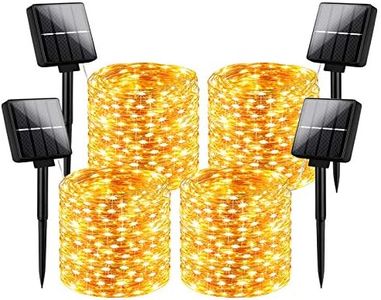


Buying Guide for the Best Solar Fairy Lights
Choosing the right solar fairy lights can make your garden, patio, or indoor space more magical while staying energy-efficient. Since these lights are powered by the sun, they're easy to install, don't require electrical outlets, and add ambience wherever you place them. To pick the best solar fairy lights for your needs, it's important to understand the main features and how they affect the lights' performance and usability. Knowing what each specification means will help you select lights that are both beautiful and practical for your specific situation.Length of Light StringThe length of the solar fairy light string tells you how much area you can cover with one set. Shorter strings (under 20 feet) are great for accenting small items like lanterns or small shrubs, while medium lengths (20-50 feet) work well for decorating fences, balcony railings, or medium-sized trees. Longer strings (over 50 feet) are perfect if you want to wrap larger areas or trees. To pick the right length, measure the area you want to decorate and choose a string that slightly exceeds that distance to allow for some slack and creative wrapping.
Number of LEDsThe number of LEDs on the string affects how bright and evenly spaced the lights look. Fewer LEDs spaced out will give a more twinkly, subtle look, while more LEDs packed closely together create a denser and brighter effect. If you want a dramatic sparkle, choose layouts with higher LED counts; for softer ambience, fewer LEDs may be just right. Think about your decorating style and how much brightness you want.
Solar Panel Quality and SizeThe quality and size of the solar panel determines how efficiently it can collect sunlight and recharge the batteries. Larger and more efficient panels will recharge faster and work better in low-light conditions. If your lights will be in a shaded area or if you live somewhere with shorter days, a bigger or higher-quality solar panel will help the lights stay bright longer. For full-sun spots, most standard panels will work just fine.
Battery Capacity and TypeBattery capacity, commonly measured in milliamp-hours (mAh), affects how long your lights will stay on after a day of charging. Bigger capacities mean the lights can run longer, especially important if you want them to last all night. The battery type also matters—rechargeable lithium batteries tend to last longer and charge more quickly than older nickel-based types. Think about how late you want the lights on and how often you're willing to change or maintain batteries.
Lighting Modes and ControlsMany solar fairy lights offer multiple lighting modes like steady-on, flashing, fading, or twinkling effects. Some come with simple on/off switches, while others include remotes or timers. If you want versatility for different moods or holidays, look for lights with multiple modes and easy-to-use controls. If you just need a constant gentle glow, a basic set without many modes may suit you best.
Waterproof RatingThe waterproof rating, usually noted as IP followed by two numbers (like IP65), indicates how well the lights can handle rain and moisture. Higher numbers mean better protection—IP44 offers basic splash resistance while IP65 or higher means the lights can handle heavy rain. If you're placing lights outdoors in a climate with lots of rain or potential splashing, choose higher waterproof ratings to ensure longevity and safety.
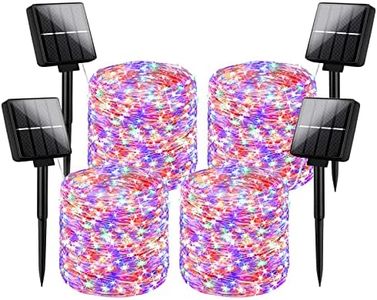
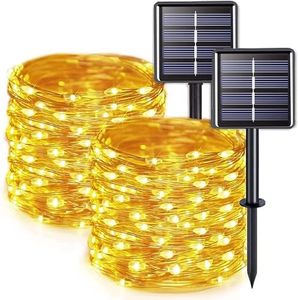
Light Color and TemperatureThe color of the lights can be warm white, cool white, or multi-colored. Warm white gives a cozy, soft glow ideal for relaxing atmospheres. Cool white emits a brighter, more modern-looking light. Multi-color adds a festive, playful touch. Choose the color based on the mood you want to set—cozy, modern, or fun.
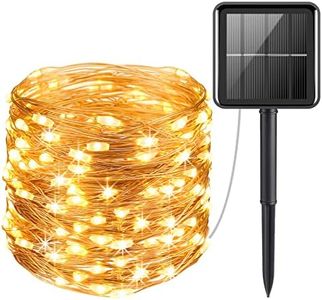
Wire Type and FlexibilityThe wire holding the fairy lights can be made of copper, plastic, or other materials, and some wires are flexible while others are more rigid. Flexible copper wires are easy to shape around objects and create intricate patterns. Sturdier wires keep straight lines better and tangle less. If your project requires wrapping around branches or creating custom shapes, flexible wire is best. For simple, straight installations, a stiffer wire is fine.