10 Best Solar Rv Batteries
From leading brands and best sellers available on the web.By clicking on a link to a third party's website, log data is shared with that third party.
Related Products
Up to 11% off
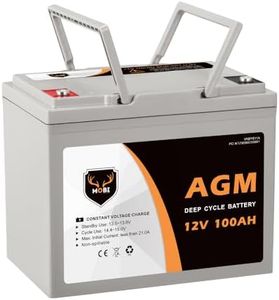
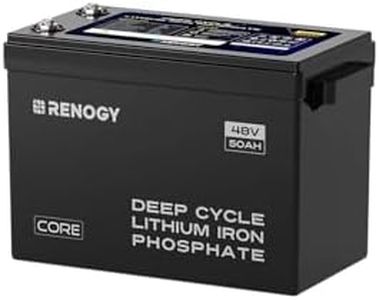
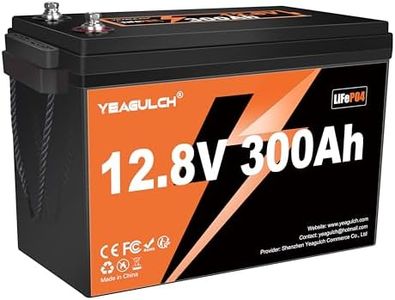
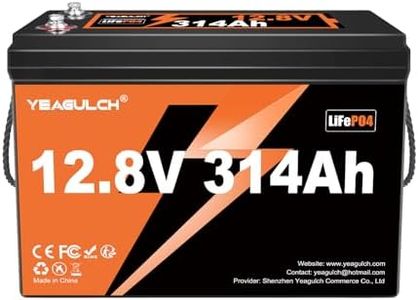
Buying Guide for the Best Solar Rv Batteries
Choosing the right solar RV battery can make a big difference in your RV experience. A well-matched battery will store enough power for your trips, keep your appliances running smoothly, and last a long time without frequent replacements. To choose wisely, you need to consider how much energy you usually use, how long you'll be off-grid, what type of appliances you run, and how much space and weight your RV can handle. Understanding the key battery specifications is the first step to finding the best battery for your adventures.Battery Capacity (Ah)Battery capacity is measured in ampere-hours (Ah) and shows how much electrical energy a battery can store. It's important because it determines how long you can run your devices before the battery needs to be recharged. Capacity values usually range from around 50Ah for small batteries to over 300Ah for large ones. If you only power small things like lights and phones, a lower capacity might be enough. If you have larger appliances like refrigerators or lots of electronics, you’ll need a higher capacity. Consider your daily power use and how long you plan to go between charges to choose the right capacity for your needs.
Battery Type (Chemistry)RV solar batteries come in different types, mainly lead-acid (including AGM and Gel) and lithium (like LiFePO4). This matters because each type affects battery weight, lifespan, maintenance, and cost. Lead-acid batteries are heavier, need venting, and can require maintenance, but they cost less upfront. Lithium batteries are lighter, last much longer, and don’t need regular upkeep, but they cost more initially. If you want something affordable and don't mind checking water levels or occasional maintenance, lead-acid might work. If you want lighter, maintenance-free batteries that hold charge better over time and don’t mind the extra cost, lithium is often a better choice.
Depth of Discharge (DoD)Depth of Discharge means how much of the battery’s total capacity you can safely use before recharging. This is important because using more of the battery each cycle can wear it out faster. Lead-acid batteries usually allow only about 50% discharge to keep them healthy, while lithium batteries can often be safely discharged up to 80-100%. If you need longer periods between charges, a battery with a higher DoD lets you use more stored energy. Consider your typical usage and recharge routine to decide how crucial a high DoD is for you.
Cycle LifeCycle life tells you how many charge and discharge cycles the battery can handle before losing significant capacity. It’s important because a higher cycle life means the battery will last longer, which is especially valuable for frequent travelers. Lead-acid batteries might last a few hundred to a thousand cycles, while lithium batteries can last 2000 cycles or more. If you use your RV regularly or for long trips, a higher cycle life can save you time and hassle in the long run.
Charging SpeedCharging speed is how quickly a battery can be replenished from your solar panels or other sources. Slow-charging batteries may limit how much power you can store during the day. Lithium batteries generally charge faster, while lead-acid types take more time, especially in the last part of the charge. If your trips involve lots of sun and short periods for recharging, quick-charging batteries are more useful. Think about your solar setup, daily energy needs, and how often you can recharge to pick the right charging speed.
Size and WeightSize and weight are the physical dimensions and mass of the battery, which directly affect how easy it is to fit and handle in your RV. Heavier and bigger batteries can limit where you install them and may be a problem for small RVs with limited space or weight capacity. Lithium batteries usually provide more energy for less weight and space than lead-acid. Consider how much room you have, what weight your RV can handle, and where you plan to install the batteries to find the right balance.
Temperature ToleranceTemperature tolerance describes how well a battery performs in extreme hot or cold conditions. Batteries that can't handle your climate may lose capacity or get damaged faster. Lead-acid batteries usually cope better with freezing temperatures, while lithium batteries can lose charge or get damaged if charged below freezing unless specifically built to handle the cold. Think about where you travel—if you camp in hot deserts or wintry mountains, check the battery’s temperature ratings so it won’t let you down.