10 Best Stainless Steel Woks
From leading brands and best sellers available on the web.By clicking on a link to a third party's website, log data is shared with that third party.
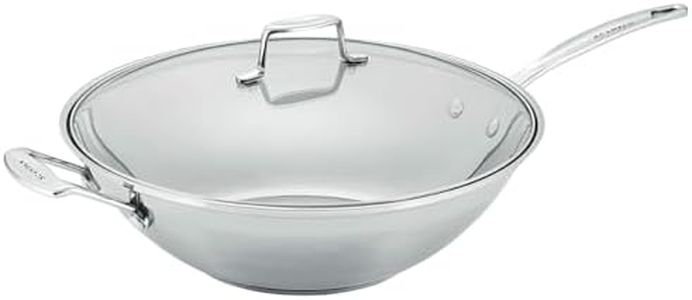
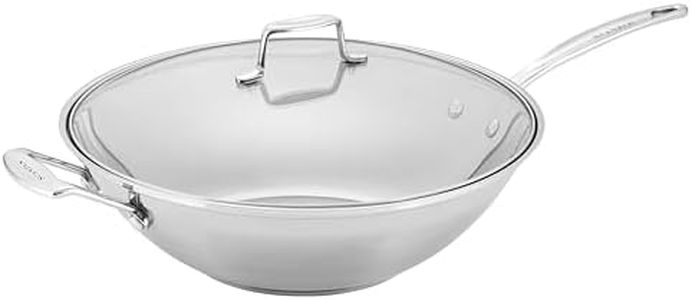
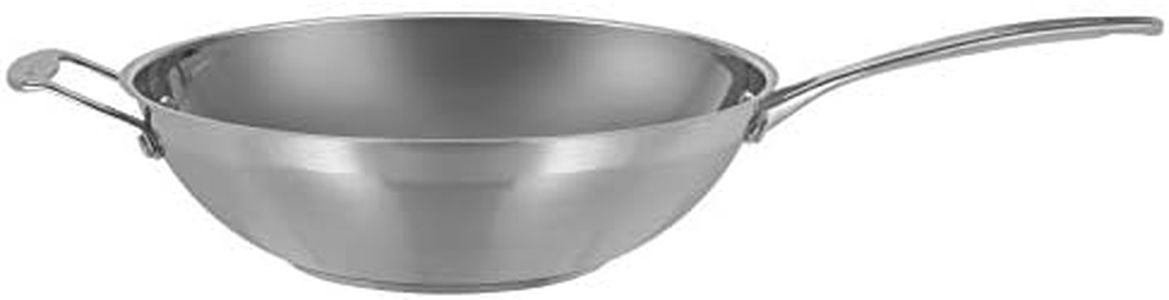
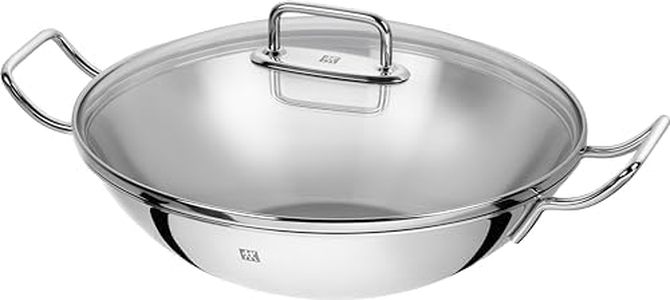
Related Products
Up to 50% off



Buying Guide for the Best Stainless Steel Woks
Choosing a stainless-steel wok is a great idea if you want a versatile, durable, and easy-to-clean piece of cookware that can handle a variety of cooking tasks beyond just stir-frying. Stainless-steel woks are favored for their resistance to rust and staining, and they don’t react with acidic foods, making them a safe and long-lasting option in any kitchen. To pick the best one for your needs, focus on a few key features that affect cooking performance, comfort, and long-term satisfaction.Material CompositionMaterial composition in stainless-steel woks refers to whether the wok is pure stainless steel or has an aluminum or copper core built into the base or sides. This is important because pure stainless steel doesn't conduct heat as well as other metals, so woks often have a core that helps distribute heat more evenly. If you cook a lot and need even heating for stir-fries or searing, look for a wok with a bonded or layered base. For simpler cooking, a single-layer stainless-steel wok may be enough. Think about how evenly you want your food to cook; the more performance you want, the more you should prioritize multi-layered construction.
Size and CapacityThe size of a wok is usually measured by its diameter, most commonly ranging from 10 inches up to 16 inches. This matters because the right size will depend on how many people you usually cook for and how much space you have in your kitchen. A smaller wok (10–12 inches) is useful for 1–2 people or small kitchens, while a medium size (13–14 inches) is versatile for most households. Large woks (15–16 inches) are better if you often cook for groups. Choose the size that matches the portion sizes you need and the space available for storage and stovetop use.
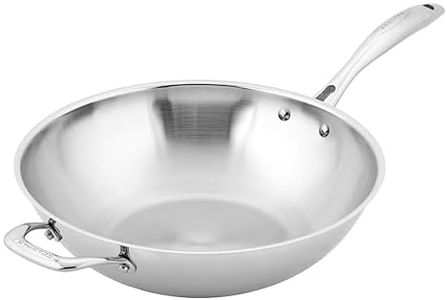
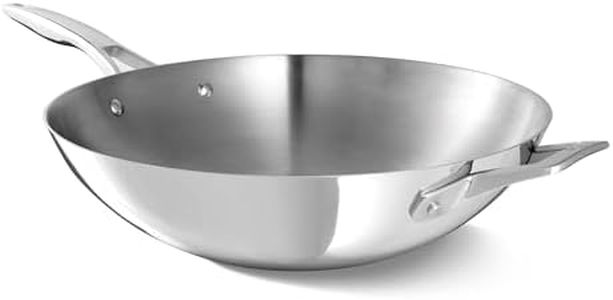
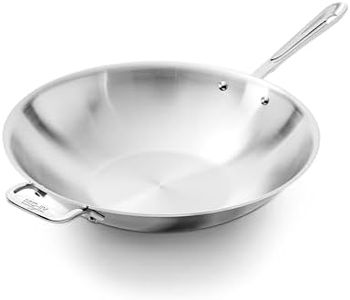
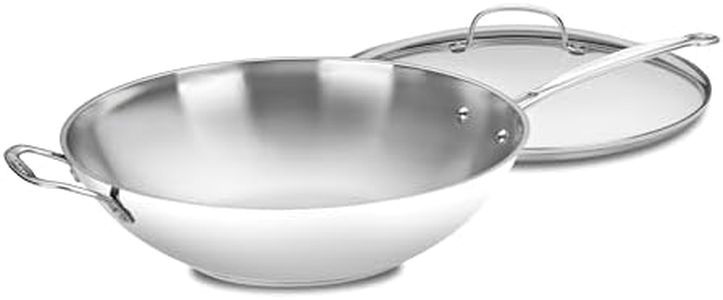
Handle StyleStainless-steel woks come with either two short handles (like a traditional wok) or one long handle and one helper handle (like a frying pan). Handle style is important for safety and ease of use. Two short handles make it easier to lift and move a heavy wok but can get hot during cooking. A long handle lets you toss or stir food easily but may require extra support for heavier dishes. Consider your comfort with tossing food and lifting weight; if you like traditional stir-frying, go for a long handle, otherwise, two short handles may work better.
Depth and ShapeThe depth and curve of the wok can affect how your food cooks. Deeper, rounded woks are better for tossing and prevent food from spilling, which is handy for stir-fries. Flatter-bottomed woks are more stable on electric or induction stoves and make it easier to sear. If you have a gas stove, a round-bottomed wok can give you a more authentic experience, but for flat stovetops, a flat-bottomed wok is a better fit. Think about your stove type and cooking style to guide your choice here.
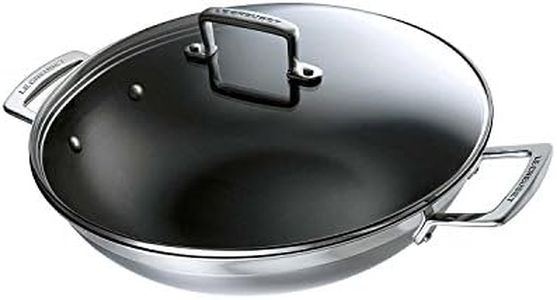
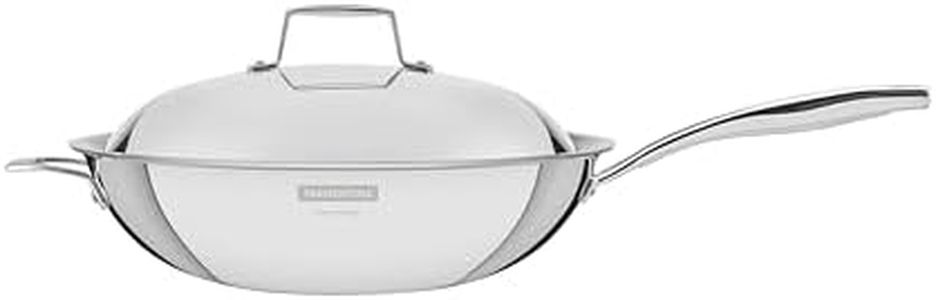
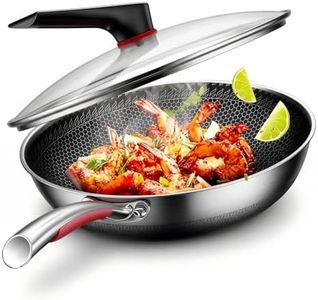
Lid InclusionSome stainless-steel woks come with a fitted lid, while others don’t. Having a lid helps if you want to steam, braise, or simmer foods as well as stir-fry, making the wok more versatile. If you only plan to cook quick stir-fries, a lid may not be necessary, but if you want to expand your cooking techniques, look for a wok that comes with a well-fitting lid.
WeightThe weight of the wok affects how easy it is to handle and move. Thicker, heavier woks hold heat better and resist warping, but can be difficult to lift and toss, especially if full. Lighter woks are easier to maneuver but might heat less evenly. Decide if you value stability and heat retention over easy handling, or vice versa, to find your ideal balance.