10 Best Sticker Paper
From leading brands and best sellers available on the web.By clicking on a link to a third party's website, log data is shared with that third party.
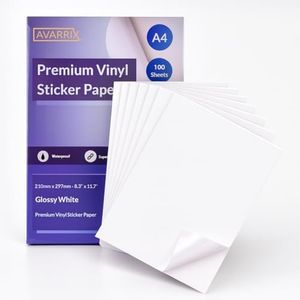
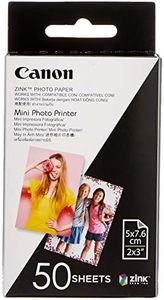
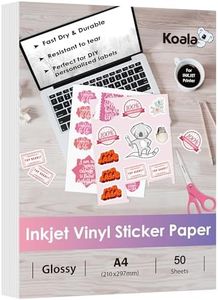
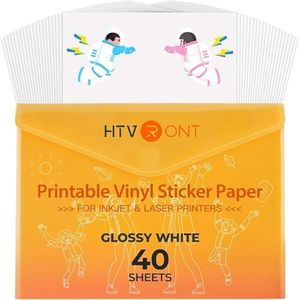
Related Products
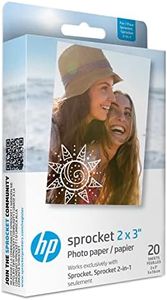
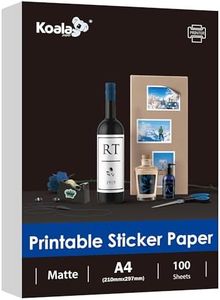
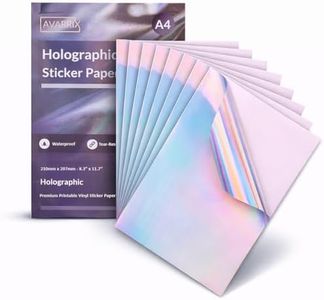
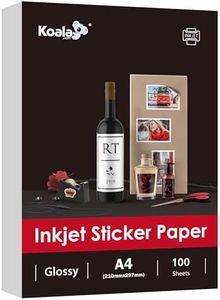
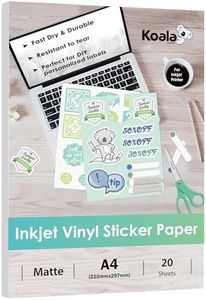
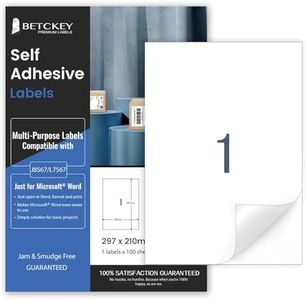
Buying Guide for the Best Sticker Paper
Choosing the right sticker paper might seem straightforward, but a little knowledge can help you avoid frustrating mistakes and wasted materials. The key is to match your intended use with the right paper type and quality to get the result you want, whether you're making labels for jars, decals for laptops, crafts, or business branding. Look closely at the paper's compatibility with your equipment and consider where your stickers will end up—these will directly affect how your finished product looks and lasts.Paper Type (Matte vs. Glossy)Sticker paper is typically available in matte or glossy finishes. Matte paper has a non-shiny, smooth surface that gives a more understated appearance, while glossy paper offers a shiny, reflective finish that makes colors appear more vibrant and eye-catching. If you need stickers for labeling or a subtle craft look, matte is usually the best; for decorative or promotional stickers where color 'pop' matters, glossy works well. Consider where and how your stickers will be used to guide your pick.
Printer Compatibility (Inkjet vs. Laser)Sticker paper is made specifically for either inkjet or laser printers. Using the wrong type can cause poor print quality or even damage your printer. Inkjet paper is designed to absorb liquid ink, giving sharp, colorful results, while laser paper can withstand the high heat of a laser printer. Always check your printer type and pick paper labeled to match—it's a basic but vital step for good results.
Adhesive StrengthSticker papers differ in how strongly they stick. Permanent adhesive ensures your sticker stays put, which is ideal for labeling or long-term use, while removable adhesive allows for easy peeling without residue—perfect for temporary stickers or crafts. Think about whether the sticker needs to last or if you’ll want to reposition or remove it, then choose accordingly.
Water ResistanceSome sticker papers are designed to resist water, which is crucial if your stickers will be exposed to moisture (like water bottles or outdoor surfaces). Water-resistant paper will help your stickers look good for longer in damp settings. If your stickers will mostly be indoors or away from water, standard sticker paper is usually sufficient.
Paper ThicknessThe thickness of sticker paper affects durability, ease of handling, and how well it works in your printer. Thicker paper feels more substantial and stands up to handling, but may jam low-end printers or be hard to cut by hand. Thinner paper works well for large batches or intricate shapes but may feel flimsier. Consider your printer's specs and how durable you want your stickers to feel when choosing thickness.
Backing Type (Cut-to-Size vs. Full Sheet)Sticker paper comes either pre-cut (with shapes like circles or rectangles) or as full sheets. Pre-cut types are convenient if you’re making standard-sized stickers and don’t want to deal with cutting after printing, while full sheets allow maximum creativity for custom shapes and sizes. Choose pre-cut for efficiency or full sheet if you need flexibility.