4 Best Succulent Soil Mixes
From leading brands and best sellers available on the web.By clicking on a link to a third party's website, log data is shared with that third party.
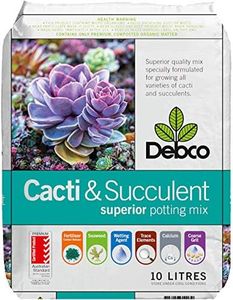
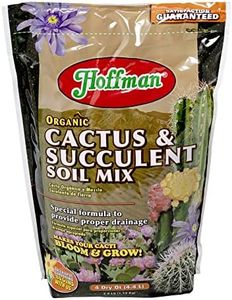
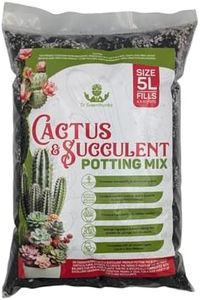
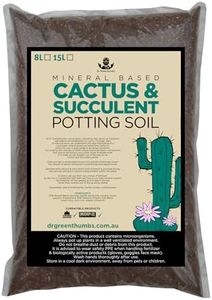
Buying Guide for the Best Succulent Soil Mixes
When choosing a soil mix for your succulents, it's important to remember that these plants have special needs compared to other houseplants. Succulents are adapted to dry environments and require soil conditions that help prevent overwatering and root rot. Picking the right soil helps your succulents grow healthy roots, retain the right amount of moisture, and get the nutrients they need. To find the best option for your plants, focus on key characteristics of soil mixes.DrainageDrainage refers to how quickly water can move through the soil and away from the roots. Good drainage is especially important for succulents since their roots are prone to rotting if left in soggy soil. Soil mixes that drain well usually contain materials like sand, perlite, or crushed granite. If you tend to water your plants frequently or live in a humid environment, a fast-draining mix is essential. If you live in a particularly dry climate or often forget to water, you might get by with a slightly slower-draining mix, but too much moisture retention is always risky for succulents.
TextureTexture describes how fine or coarse the soil particles are. Succulent soil mixes typically have a chunky or gritty texture due to mineral components mixed in with organic matter. Fine, powdery soils tend to hold onto water and compact easily, which can suffocate succulent roots. Coarser mixes allow air pockets, helping roots breathe and excess water escape. If you're growing small succulents or using small pots, choose a moderately chunky mix to support them. For larger pots or outdoor plantings, a coarse texture is even more beneficial.
Nutrient ContentNutrient content refers to the presence of essential minerals and organic materials that plants need to grow. Succulents don't require as much fertilizer as other plants, but starting with a mix that has some organic matter like compost or coconut coir can help initial growth. If the mix is mostly inorganic (like sand and perlite), you may need to supplement with fertilizer occasionally. If your succulents are slow-growing or you're repotting established plants, a low-nutrient mix might be best; fast growth or young plants could benefit from a bit more organic matter.
pH LevelSoil pH determines how acidic or alkaline the soil is, affecting nutrient availability. Most succulents prefer a slightly acidic to neutral pH, usually between 5.5 and 7. If the mix is too acidic or too alkaline, your plants might have trouble absorbing nutrients, even if they're present in the soil. When in doubt, choose mixes labeled as 'for succulents and cacti,' as these are generally within a safe pH range. If you notice slow growth or yellowing leaves, consider checking the pH and adjusting if necessary.
Water RetentionWater retention relates to how much moisture the soil holds after watering. Succulents need soil that dries out quickly between waterings. Soil mixes with lots of peat moss or vermiculite hold onto moisture longer, which can be harmful to succulents. If you live somewhere hot and dry, a mix with a little water retention can reduce watering frequency, but always avoid soils that stay damp for several days. For most people and environments, a mix that dries within a day or two is the safest choice.