10 Best Survival Compass
From leading brands and best sellers available on the web.By clicking on a link to a third party's website, log data is shared with that third party.
Related Products

Buying Guide for the Best Survival Compass
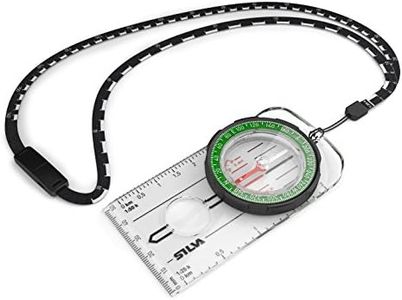
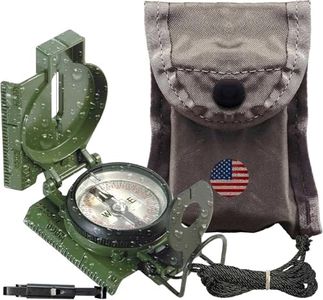
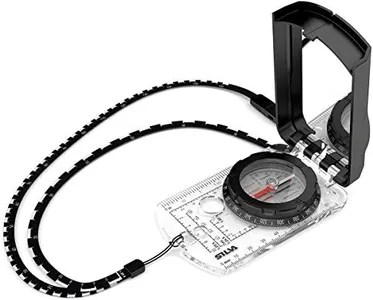
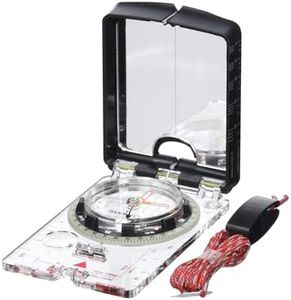
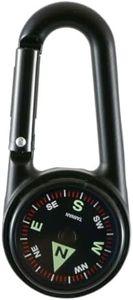
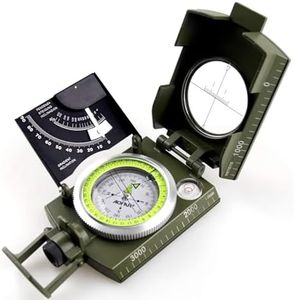
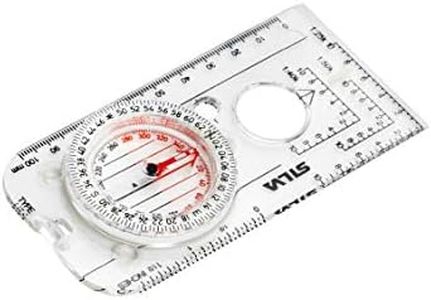
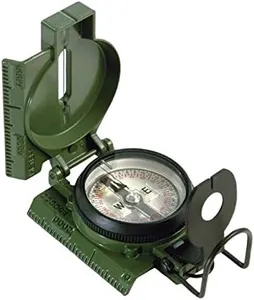
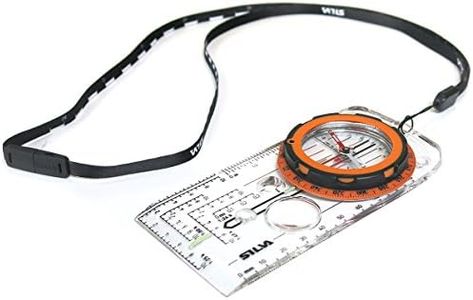
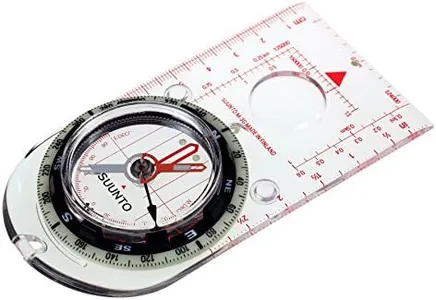
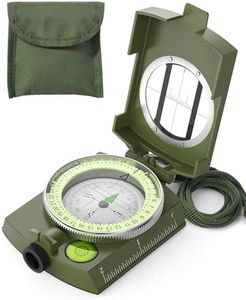
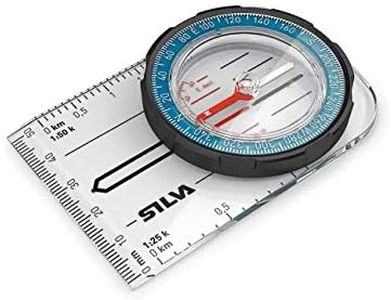
Choosing the right survival compass is a smart step for anyone interested in outdoor adventures, hiking, or emergency preparedness. A good compass is an essential tool when GPS devices fail or batteries die; it helps you navigate by using the Earth's magnetic field. The right compass can make a big difference in your ability to find your way and stay safe, but the best choice depends on your experience, environment, and intended use. Understanding the key specifications will help you pick a compass that's a perfect fit for your needs.Type (Baseplate, Lensatic, Button or Watch)This refers to the overall design and intended use of the compass. Baseplate compasses are popular for hiking and orienteering, thanks to their clear base and ruler for map reading. Lensatic compasses (often used by the military) have a cover, lens, and sighting wire for precise direction finding. Button compasses are tiny and simple, often found on survival gear but less accurate. Watch compasses are integrated into a strap or watch, offering quick checks but usually with less precision. For hikers and adventurers, a baseplate compass is generally best due to its usability with maps, whereas those needing to navigate with great precision might prefer a lensatic compass. Button and watch compasses serve well as backups, not primary tools.
Declination AdjustmentDeclination adjustment allows you to account for the difference between magnetic north (where your compass points) and true north (the top of your map). This feature makes navigation more accurate, especially when traveling over long distances or in areas with significant magnetic declination. Some compasses have a small screw or dial for this, while budget or simple models leave it out. If you plan to do detailed navigation, look for a compass with this adjustment. For casual use or as a backup, it may not be critical.
Global NeedleA global needle is designed to work in any part of the world, whereas regular compasses are tuned for different geographic zones based on the angle of the Earth's magnetic field. Without a global needle, a compass may not balance or function accurately if used far from its intended region. If you travel internationally or plan to explore in both hemispheres, a global needle is important. If you'll use your compass only locally, a region-specific compass is usually sufficient.
Luminescence/Night VisibilityLuminescent markings or features mean the compass can be read in low or no light, either by glowing in the dark or with a built-in light. This is important for navigating at night, in fog, or during emergencies. The intensity and duration of the glow vary: some compasses use paint that needs charging by light, while others may have tritium that glows on its own. If you think you'll ever need to navigate after dark, choose a compass with strong luminescent markings.
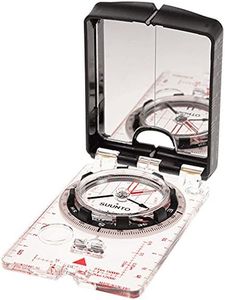
Sighting MirrorA sighting mirror lets you take more accurate readings by reflecting the compass dial while you aim at a distant landmark. This helps in precise navigation and can also double as a signal mirror in emergencies. If you anticipate needing accurate bearings or want an extra survival feature, a sighting mirror is valuable. Casual users or those who rely mostly on rough direction finding may not need it.
Durability and WaterproofingSurvival compasses need to withstand rough conditions, including drops, rain, mud, and extreme temperatures. Durable construction, waterproof casing, and a shock-resistant design all ensure the compass keeps working when you need it most. If you are likely to be in adverse environments or unpredictable weather, prioritize these features. For easy hikes or basic use, standard build quality may suffice.
Size and WeightA compass should be light and compact enough to carry easily but not so small that usability suffers. Larger compasses tend to be easier to read and handle, while very small ones (like button compasses) can be harder to use accurately. Think about your needs—if you want a main navigation tool, pick one that balances portability with ease of use. For backup or emergency kits, a smaller compass is fine.