7 Best Swimming Pool Poles
From leading brands and best sellers available on the web.By clicking on a link to a third party's website, log data is shared with that third party.
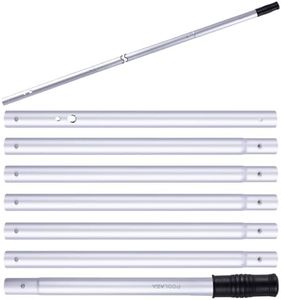
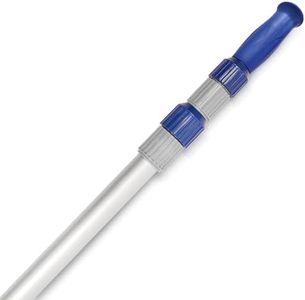

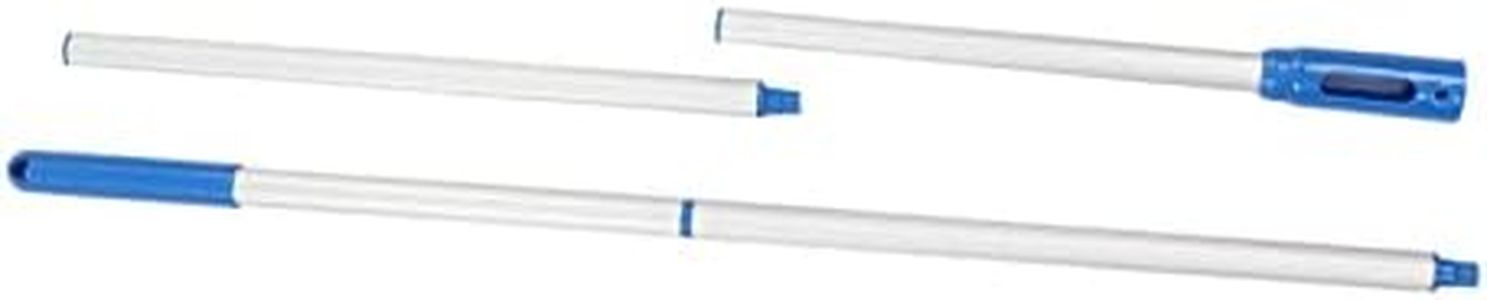
Buying Guide for the Best Swimming Pool Poles
Choosing the right swimming pool pole can make cleaning and maintaining your pool much easier and more efficient. These poles are essential tools for attaching nets, brushes, and vacuums, allowing you to reach all areas of your pool with minimal effort. When selecting a swimming pool pole, it’s important to consider the specs that affect its usability, durability, and compatibility with your existing pool maintenance equipment. By understanding what each key spec means and how it matches your particular needs, you can find a pole that will serve you well for a long time.Length (Collapsed and Extended)Length refers to how long the pole is when fully collapsed and when fully extended. This is important because you need a pole that can reach all parts of your pool—especially the pool floor and the farthest corners. Poles often come in adjustable lengths, typically ranging from about 4 feet when collapsed to 12, 16, or even 21 feet when extended. If you have a small above-ground pool, a shorter pole will usually suffice, while larger in-ground pools require longer poles. Choose a length that allows you to clean your pool without having to stretch too much, but not so long that it's hard to control.
MaterialThe material of the pole affects its weight, strength, and durability. Common options include aluminum, fiberglass, and sometimes hybrid materials. Aluminum poles are lightweight and generally affordable, but can bend if too much force is applied. Fiberglass poles are stronger and resist corrosion, but can be heavier. The right choice depends on how often you clean the pool and how much strength you need—a heavier, more durable pole suits frequent, intensive cleaning, while a lightweight pole can be easier for occasional or lighter use.
Locking MechanismThe locking mechanism lets you adjust and secure the length of the pole. There are twist locks, cam locks, and sometimes button locks. A reliable locking mechanism is important to prevent the pole from collapsing while in use. Twist locks are common and easy to use, while cam locks generally provide a firmer hold and can be a better fit for heavy-duty use. If you expect to adjust the pole often, look for a mechanism that's simple and convenient for you to operate, and that won't wear out quickly.
Grip and ComfortGrip refers to how easy and comfortable the pole is to hold. Look for poles with non-slip, padded, or textured grips, especially if you spend more time cleaning or have wet hands. A comfortable, ergonomic grip makes it easier to maneuver the pole and reduces hand fatigue. If you or others using the pool pole have smaller hands or less hand strength, comfort features become even more important.
Attachment CompatibilityAttachment compatibility means how well the pole works with different pool cleaning accessories, like nets, brushes, and vacuum heads. Most pool poles use a universal attachment point, but some require specific fittings. If you already own cleaning attachments, check that the new pole will fit them. If you're starting from scratch or plan to upgrade your tools in the future, a standard universal fitting is the most flexible option.
WeightWeight is how heavy the pole is when handled. Heavy poles can provide more stability and control, especially with heavy attachments, but may be tiring to use for long periods. Lighter poles are easier for quick use or for people who may not have as much strength. Consider who will be using the pole most frequently and for how long, and pick a weight that balances sturdiness with ease of use.