10 Best Telescopes For Sale
From leading brands and best sellers available on the web.By clicking on a link to a third party's website, log data is shared with that third party.

Related Products
Up to 16% off
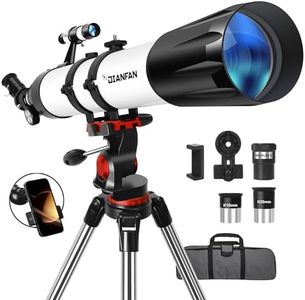
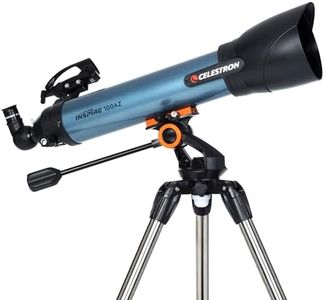
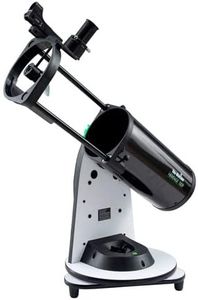
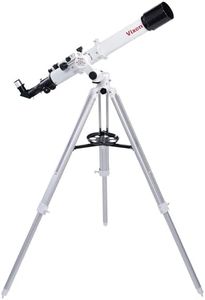
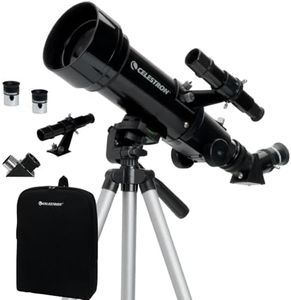
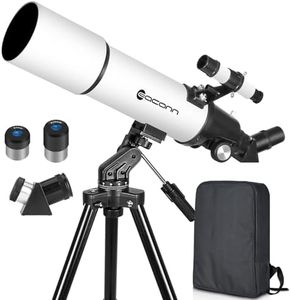
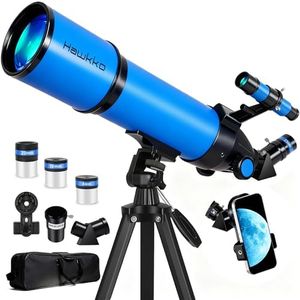
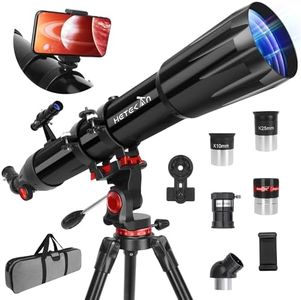
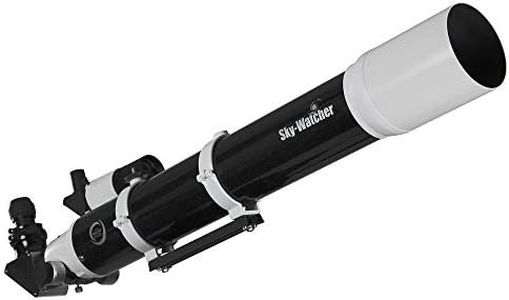
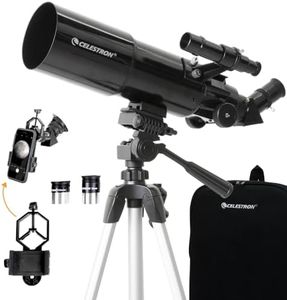
Buying Guide for the Best Telescopes For Sale
Shopping for a telescope can be exciting, but with so many options, it’s easy to feel overwhelmed. The right telescope will make stargazing enjoyable and allow you to see celestial objects clearly. It's important to consider how you plan to use it, whether you're interested mainly in viewing the moon, planets, or deep-sky objects like galaxies and nebulae. Think about where you'll set up the telescope, how portable it needs to be, and how comfortable you are with setups and adjustments. Understanding a few key specifications will help guide you to a telescope that suits your needs and enhances your stargazing experience.Aperture SizeAperture size refers to the diameter of the telescope’s main lens or mirror, usually measured in millimeters or inches. This is one of the most important specs because a larger aperture lets in more light, which means you'll see fainter and more distant objects, and images will be sharper. Small aperture telescopes (under 70mm) are good for casual moon and planet observations but have limited deep-sky capability. Medium apertures (about 70–130mm) offer a good balance for beginners and can reveal brighter deep-sky objects. Large apertures (150mm and up) are best for serious deep-sky viewing but are heavier and may need more setup. Consider what you want to observe and how easily you can handle the scope—if you want portability for quick backyard views, a medium aperture might be ideal.
Focal Length and Focal RatioFocal length measures the distance from the telescope's main lens or mirror to where it forms an image, affecting the telescope's magnifying capability. The focal ratio, often written as f/number, is the focal length divided by the aperture. Lower focal ratios (like f/4-f/6) give wider, brighter views suitable for observing large star clusters and nebulae, while higher focal ratios (like f/8-f/12) are better for viewing planets and the moon with more detail. If you want to see larger areas of the sky at once, go for a lower focal ratio; for detailed planet observation, higher ratios are preferable.
Type of TelescopeThe main types are refractors, reflectors, and compound (catadioptric) telescopes. Refractors use lenses and are low-maintenance, making them good for beginners, especially for lunar and planetary viewing. Reflectors use mirrors and can offer larger apertures at lower prices, ideal for deep-sky objects, but require occasional alignment. Compound telescopes combine lenses and mirrors, balancing compactness with versatility and tend to be easier to transport. Think about your most common observing plans—if you want simple use and easy care, refractors are a safe bet; for more advanced deep-sky searches, reflectors or compounds might suit you better.
Mount TypeA telescope’s mount supports it and helps you track objects in the sky. The two main types are alt-azimuth and equatorial. Alt-azimuth mounts move up-down and left-right, making them intuitive and great for beginners and casual viewing. Equatorial mounts, which align with Earth’s axis, are more complex but allow for smoother tracking of objects as they move across the sky—especially handy for astrophotography or longer stargazing sessions. Choose simpler alt-azimuth if you want hassle-free setup, and equatorial mounts if you're planning to observe objects for extended periods or delve into photography.
Portability and SetupPortability covers how easily you can move and set up your telescope. Some telescopes are compact and lightweight and can be set up quickly, making them great for spontaneous or travel-based stargazing. Others are heavier and require more assembly, but provide better stability and performance. If you'll move your telescope often or have limited storage, prioritize a lighter, easy-to-assemble option. For a permanent or semi-permanent setup at home, a larger, sturdier telescope can be more enjoyable despite being less portable.
Eyepieces and AccessoriesEyepieces control the magnification and clarity of the view through your telescope. Many telescopes come with one or two eyepieces, but you can purchase more for varied magnification. Lower-power eyepieces give wider views; higher-power eyepieces zoom in for more detail, but may be limited by conditions like sky clarity. Other useful accessories can include finder scopes to help you locate objects, and filters to enhance viewing. If you’re just starting, basic included accessories will suffice; as you learn what you enjoy viewing, you can expand your collection of eyepieces and extras.