10 Best Thermal Printers
From leading brands and best sellers available on the web.By clicking on a link to a third party's website, log data is shared with that third party.
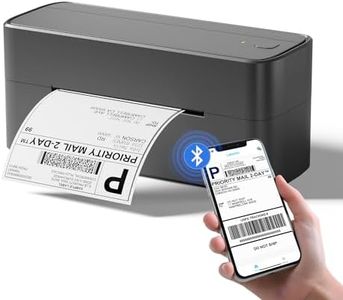

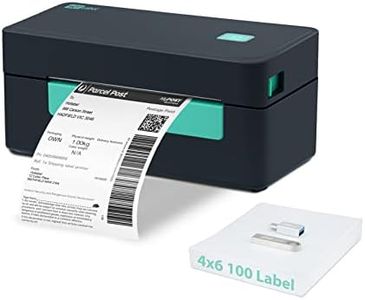
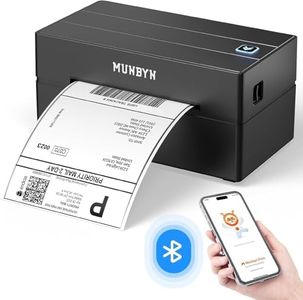
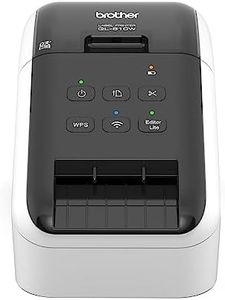
Related Products
Up to 18% off

Buying Guide for the Best Thermal Printers
Thermal printers are widely used for tasks such as printing receipts, shipping labels, barcodes, and more. Choosing the right thermal printer depends on your intended use, how often you'll use it, and the environment where it will be placed. Before buying one, get clear on what you’re printing, the expected volume, your space limitations, and connectivity needs. Taking the time to understand key features will help you select a reliable printer that matches your workflow and avoids unnecessary frustration.Printing MethodThermal printers use either direct thermal or thermal transfer methods. Direct thermal printers use heat-sensitive paper and require no ink, making them simple and low-maintenance, but the prints tend to fade with time and exposure to light or heat. Thermal transfer printers use a ribbon to create longer-lasting prints on a variety of materials. If you need quick, temporary prints like receipts, direct thermal is a good choice. For durable labels or barcodes, thermal transfer is better – consider what you’ll be printing most often.
Print SpeedPrint speed is measured in millimeters or inches per second and tells you how fast the printer will produce labels or receipts. Higher speeds are useful for busy environments with lots of printing, like retail or shipping departments. Speeds can usually be grouped into slow (up to 4 inches per second), medium (4-8 inches per second), and fast (over 8 inches per second). Choose a speed that matches your workflow: occasional home users can get by with slower speeds, while businesses with high traffic need faster models.
Print ResolutionPrint resolution, measured in dots per inch (DPI), affects how sharp and clear the printouts are. Low resolution, like 203 dpi, is good for basic text and simple logos. Medium, around 300 dpi, offers better clarity for small fonts and standard barcodes. High resolution, above 300 dpi, is needed for tiny graphics or very detailed labels. Think about how small your barcodes, text, or images will be—if you need sharp detail, go for higher resolution.
Media CompatibilityMedia compatibility refers to the types and sizes of paper or labels a printer can handle. Some printers only work with small receipts, while others can handle wider shipping labels or specialty materials. Pay attention to the maximum and minimum widths the printer supports and whether it can print on adhesive labels, tags, or continuous rolls. Make sure the printer can handle the media you plan to use most frequently; this avoids frustration and wasted supplies.
Connectivity OptionsConnectivity determines how the printer communicates with your other devices. Common options include USB, Ethernet, Wi-Fi, and Bluetooth. USB is simple for direct connections to a single computer, Ethernet is great for shared network use, and wireless options like Wi-Fi or Bluetooth are useful for flexible placement or mobile setups. Think about where your printer will be and how many people need to access it: choose the connectivity that makes your setup easy and convenient.
Duty Cycle (Recommended Usage Volume)The duty cycle or recommended usage volume tells you how many prints a printer is designed to handle in a given time period, such as daily or monthly. Light-duty printers are fine for occasional, low-volume printing at home or small offices, while heavy-duty printers are built for continuous use in busy retail or warehouse environments. Pick a printer that matches or slightly exceeds your expected print volume to ensure reliable performance and long-term durability.