10 Best Trail Mountain Bikes
From leading brands and best sellers available on the web.By clicking on a link to a third party's website, log data is shared with that third party.
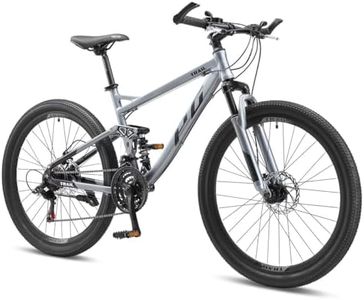
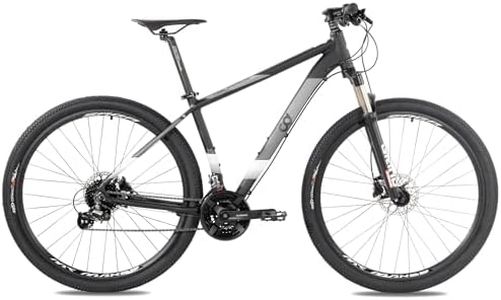
Related Products
Buying Guide for the Best Trail Mountain Bikes
Choosing a trail mountain bike is all about matching the bike's features to the kind of riding you plan to do. Trail bikes are versatile, built for a mix of climbing, descending, and handling rougher terrain. It's important to understand what trails you'll be riding—whether they are smooth, technical, steep, or mellow—and consider your own riding experience and preferences. Focus on the key features that affect comfort, control, and bike performance so you end up with a bike that feels right for you and supports your riding goals.Frame MaterialThe frame is the backbone of a mountain bike, affecting weight, durability, and how the bike feels on the trail. Common materials are aluminum, carbon fiber, and sometimes steel. Aluminum frames are strong and relatively light, making them a good all-rounder. Carbon fiber frames are lighter and can absorb more vibrations, leading to a smoother ride, but can be more expensive and need careful handling. Steel is heavier but very hardy and comfortable for some riders. When picking, consider if you want a lighter bike for easier climbs, or if durability and a soft ride matter more. Your riding style and how much rough handling the bike will endure can help guide your choice.
Suspension TravelSuspension travel refers to how much the front and rear shocks can compress to absorb bumps on the trail, usually measured in millimeters. Most trail bikes have between 120mm and 150mm of travel. Shorter travel (120-130mm) is best for smoother trails and more pedaling efficiency, while longer travel (140-150mm) is better for rough, technical descents. If you ride a mix of terrain, something in the middle is typically a safe bet. Think about whether you want more comfort on rough downhills or efficiency and speed on climbs and flats.
Wheel SizeTrail bikes mainly come with 27.5-inch or 29-inch wheels. 27.5-inch wheels are more agile and maneuverable, making them great for twisty trails and quick handling. 29-inch wheels roll over obstacles more easily and maintain speed better, ideal for covering ground quickly and tackling rough trails. Choose 27.5” for a playful ride and sharper turns, or 29” if you value stability and smoother rides over roots and rocks.
DrivetrainThe drivetrain covers the gears and shifting system. Most modern trail bikes use single chainring setups in front, combined with a wide-range cassette at the back, usually referred to as '1x' systems. They are simpler, lighter, and easier to use than older styles with two or three front rings. Pay attention to the gear range: if you ride steep climbs, a wider range with easier low gears will help. For mixed trails, a moderate range can be enough. Match the gear range to the typical steepness and distance of your rides.
Dropper SeatpostA dropper seatpost lets you instantly lower or raise your seat with the push of a lever, while riding. This makes it much easier to move your body on descents and put the seat back up for climbs. For trail riding, dropper posts are a game-changer for comfort and control. If you ride varied terrain or like to tackle descents, this feature is almost a must-have. Only skip it if you stick to smooth or mostly flat trails.
WeightBike weight influences how easy it is to climb, handle, and carry your bike. Lighter bikes climb more easily but sometimes trade durability for lower weight. Heavier bikes may feel more stable on descents but can tire you out on long rides. Consider whether you prioritize easy uphill riding and quick acceleration, or if you’re focusing more on fun descents and rugged surfaces where a bit of extra weight isn’t a big deal.