10 Best Training Collars For Pets
From leading brands and best sellers available on the web.By clicking on a link to a third party's website, log data is shared with that third party.
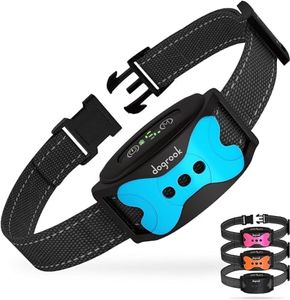
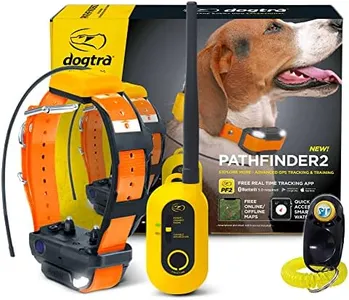
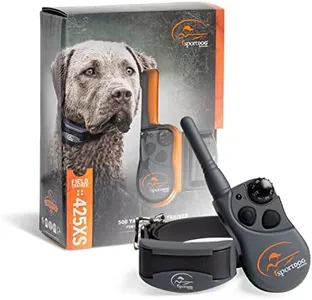
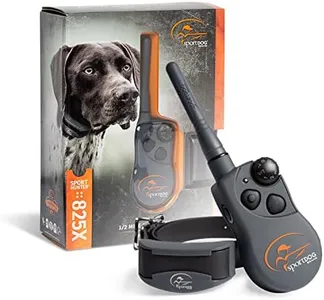
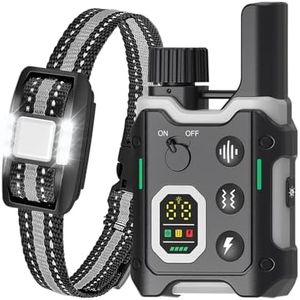
Related Products
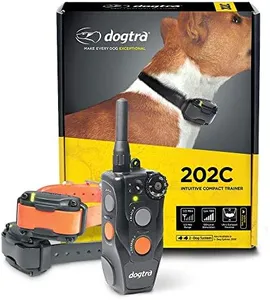

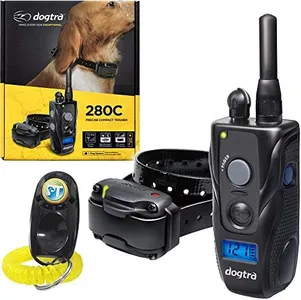
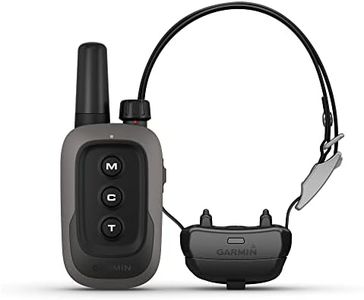
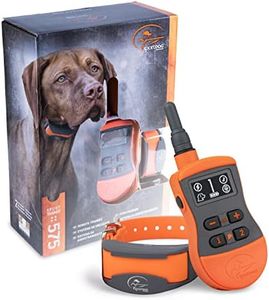

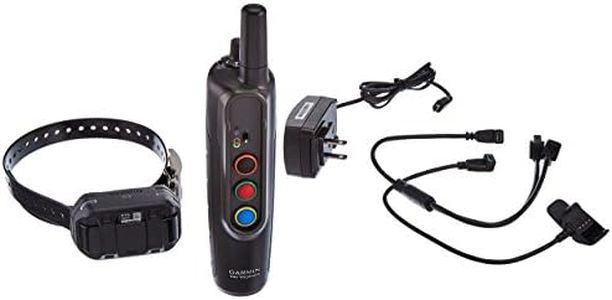
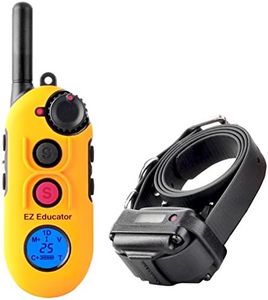
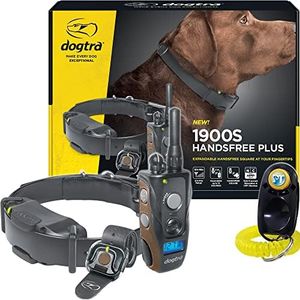
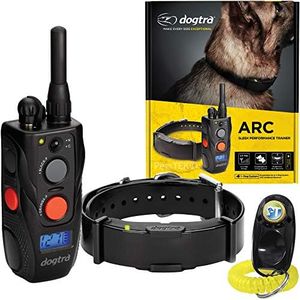
Buying Guide for the Best Training Collars For Pets
Choosing the right training collar for your pet is all about understanding your pet’s temperament, your training goals, and what method aligns with your approach to positive reinforcement. Training collars can be useful for helping to correct unwanted behaviors when used responsibly, but it’s crucial to choose a collar that fits your pet comfortably and is suitable for their size and personality. It’s helpful to learn about different types and specs to ensure safety, effectiveness, and a positive training experience for both you and your pet.Type of Training CollarTraining collars come in various types, such as flat collars, martingale collars, head collars, vibration collars, and remote-controlled electronic collars. The type you choose determines how the collar influences your pet’s behavior — some are designed for gentle guidance, while others provide corrective feedback. Understanding the distinction is vital because each type works best for different training purposes and pet personalities. For example, head collars and martingales are typically good for gentle guidance and dogs prone to pulling, while vibration or citronella collars offer a mild corrective stimulus for persistent behaviors. Always choose a type that matches your pet’s needs and your training philosophy, favoring humane and positive approaches.
Adjustability and FitAdjustability refers to how well the collar can be resized to fit your pet's neck comfortably and securely. This is important because a collar that is too tight can cause discomfort or injury, while one that’s too loose won’t be effective or safe. Adjustment ranges are usually specified in inches or centimeters. Small pets will need collars that fit smaller neck sizes, while larger breeds require collars with a broader adjustment range. Always measure your pet’s neck and read the size chart carefully to ensure a snug but not tight fit with enough space for two fingers between the collar and your pet’s neck.
Correction ModesMany training collars offer different correction modes such as sound, vibration, static stimulation, or spray. The importance lies in choosing a mode that works for your pet without causing distress or fear. Sound and vibration are gentler and suitable for sensitive pets or early-stage training; static and spray should be considered with caution and under guidance, as some pets may respond negatively. Select the gentlest mode that is effective for your pet’s specific behavior and always monitor their reaction to ensure the collar is helping, not harming.
Range (for Remote Collars)The range refers to the maximum distance over which a remote-controlled collar can communicate with the receiver on your pet’s neck. This is especially important if you plan to train in open areas, yards, or parks. Ranges usually vary from a few hundred feet up to several thousand. For home or backyard use, a smaller range may suffice, but for long-distance training or fieldwork, a greater range is necessary. Decide where you’ll be training most often and choose a range that comfortably covers that area.
Battery LifeBattery life indicates how long the collar can function before needing to be recharged or have batteries replaced. It matters because frequent charging can be inconvenient, especially for longer training sessions or forgetful users. Some collars offer several days of battery life, while others last only a few hours. If you plan to use the collar regularly, look for models with longer-lasting batteries or those that offer quick recharging, so your training is not interrupted.
WaterproofingWaterproofing shows whether the collar is resistant or impervious to water. This is important if your pet enjoys water activities, if you live in a rainy area, or simply for durability against splashes and wet grass. Some collars are only water-resistant (splash-proof), while others can be fully submerged. Match the level of waterproofing to your lifestyle — adventurous, outdoor pets need tougher, fully waterproof collars to prevent damage.
Safety FeaturesSafety features may include automatic shut-off, adjustable intensity, and reflective materials. These details help ensure the collar does not cause accidental harm, such as prolonged correction or visibility issues during walks at night. Choose a training collar with built-in safeguards so you can train your pet effectively without risking their wellbeing. Prioritize options that focus on comfort and humane correction.