10 Best Tree Felling Axe
From leading brands and best sellers available on the web.By clicking on a link to a third party's website, log data is shared with that third party.
Related Products
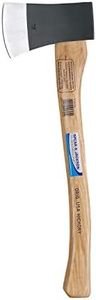
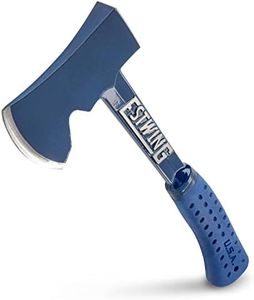
Buying Guide for the Best Tree Felling Axe
Choosing the right tree-felling axe is important for making your woodcutting effort safer, more efficient, and less tiring. The right axe will allow you to cut down trees cleanly, with less force, and minimize risk of injury. To find your ideal fit, think about your physical strength, experience level, and the size or type of trees you’ll be tackling. Here are the main features to consider as you shop:Axe Head WeightThe weight of the axe head is a key factor because it affects the force you can deliver with each swing and how tired you get over time. Lighter axes (around 2–3 pounds) are easier to handle and lift, making them suitable for smaller trees or less experienced users. Heavier axe heads (3.5 pounds and up) provide more chopping power and are better for larger trees, but they require more strength and skill. If you are new to using axes or don’t have a lot of upper body strength, stick with a lighter axe, but if you are experienced and plan to tackle large trees, consider a heavier one for more effective cuts.
Handle LengthHandle length results in more leverage, which can create a stronger swing, but it also affects how easily you can control the axe. Shorter handles (under 28 inches) are easier to maneuver and are preferable for smaller people or tight spaces. Longer handles (28–36 inches) give more power with every swing but require greater control and are best for users with enough height and strength. Consider your own size, where you’ll be working, and what feels comfortable in your hands—ideally, try swinging a few handle lengths to see what feels safest and most effective for you.
Handle MaterialAxe handles are most often made of wood (usually hickory), fiberglass, or sometimes steel. Wooden handles absorb shock well and are traditional, making them comfortable but sometimes less durable if exposed to moisture or improper use. Fiberglass handles are very durable and resistant to weather, but they may transmit more vibration into your hands. Steel handles are the toughest but often heavier and can be uncomfortable for long use. Choose a material that suits your working conditions, and if you want comfort, wood is a classic choice, whereas if you want toughness with minimal upkeep, go for fiberglass.
Axe Head Shape and ProfileThe head of a tree-felling axe has a thin, sharp profile designed to cut across wood fibers, causing deep penetrations with each swing. A too thick or bulky axe head won’t cut efficiently, while a properly shaped, narrow, and sharp head will slice through wood easily. When choosing, look for an axe head with a tapered, keen edge rather than a wedge shape, which is better suited for splitting rather than felling. Pick a shape that matches your intended use for cleaner, deeper cuts.
Balance and Overall WeightThe overall balance between the axe head and the handle will affect how the axe feels and performs during use. A well-balanced axe will swing smoothly and won’t feel heavy towards one end. To check balance, hold the axe horizontally under the head—if it feels stable and doesn’t tip far forward or back, it’s well-balanced. If you plan on swinging the axe often or for long periods, prioritize a balanced tool to reduce fatigue and maintain control.