10 Best Trickle Car Battery Chargers
From leading brands and best sellers available on the web.By clicking on a link to a third party's website, log data is shared with that third party.
Related Products
Up to 14% off
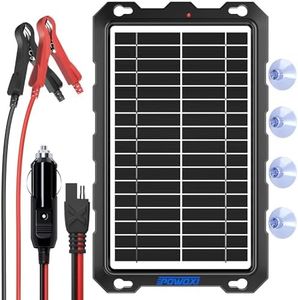
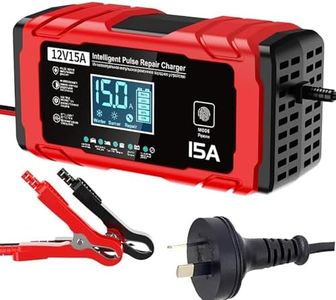
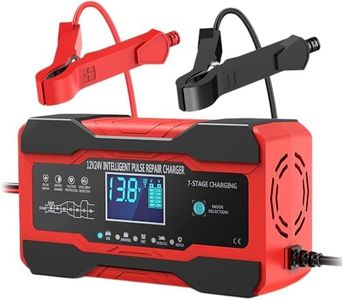
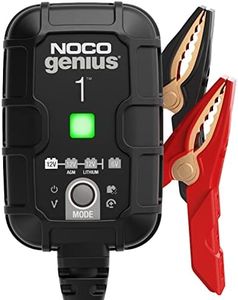
Buying Guide for the Best Trickle Car Battery Chargers
Choosing a trickle car battery charger might seem confusing at first, but with a bit of understanding, you can find the right one for your needs. The main purpose of a trickle charger is to maintain your car battery at a healthy charge level, especially when your vehicle isn't being used regularly. Rather than charging your battery quickly, a trickle charger delivers a low, steady amount of power over time, which helps prevent your battery from discharging. When deciding which charger to buy, focus on a few important features that affect how safely and effectively it works with your car.Charging AmperageCharging amperage refers to how much electric current the charger delivers to your battery. In trickle chargers, this usually ranges from 0.5 to 2 amps. Lower amperage (around 0.5-1 amp) means a gentler charge, ideal for long-term maintenance without risking overcharging, particularly for smaller batteries or classic cars that sit unused for months. Higher amperage (closer to 2 amps) can be helpful for slightly quicker charging or maintaining larger batteries found in trucks or SUVs. To choose the right amperage, consider how long your vehicle may sit unused and the size of your battery; for typical car maintenance, 1 amp is often a safe, universal choice.
Automatic Shut-OffAutomatic shut-off is a feature that allows the charger to stop charging or switch to maintenance mode when the battery is fully charged. This is important because it protects the battery from damage caused by overcharging, which can shorten its lifespan or cause safety issues. Some chargers will keep a slight 'float' charge to maintain the battery at 100%. Always look for a charger with this feature if you plan to leave it connected for long periods, such as during winter storage or while away on vacation.
Compatibility (Voltage)Car batteries typically use a 12-volt system, but some smaller vehicles or motorcycles may use 6-volt batteries. It’s crucial that your charger matches your battery’s voltage. Many trickle chargers are designed for 12-volt use, but some offer a switch to handle both 6-volt and 12-volt batteries. Double-check your vehicle's battery before buying, and choose a charger that is compatible with that voltage to ensure safe and effective charging.
Safety FeaturesSafety features in trickle chargers might include protections against reverse polarity (connecting the charger to the battery incorrectly), short-circuits, or sparks. These features are important because they help prevent accidents or damage to your car’s electrical system. For the average user, a charger with built-in safety features is a wise choice because it removes much of the risk and makes the charging process more convenient and worry-free.
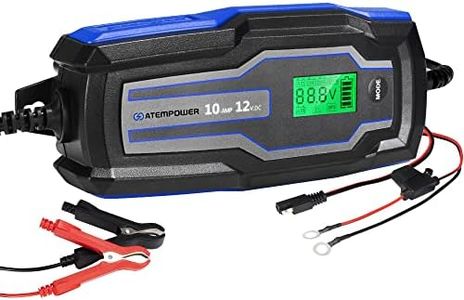
Connection MethodTrickle chargers can connect to your battery either with alligator clips or with ring terminals that can be permanently attached. Alligator clips are simple and quick to attach and remove, making them practical for occasional use. Ring terminals require a bit more setup but allow you to plug and unplug the charger easily if you plan to use it regularly. Think about how often you’ll be using the charger and how convenient each connection type will be for your situation.
Weather ResistanceIf you need to use the charger outdoors or in a garage that is not climate-controlled, look for a model that is weather-resistant or has a durable, sealed casing. This specification ensures the charger will keep working safely and reliably, even in damp or dusty conditions. For indoor-only use, weather resistance may not be critical, but outdoor scenarios definitely call for a charger built to withstand the elements.