10 Best Twist Mops
From leading brands and best sellers available on the web.By clicking on a link to a third party's website, log data is shared with that third party.

Related Products
Up to 6% off

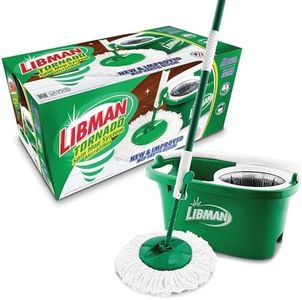


Buying Guide for the Best Twist Mops
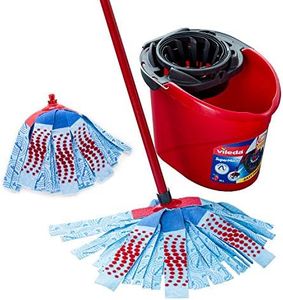
Twist mops are a popular cleaning tool, especially useful for efficiently cleaning floors with minimal mess and effort. Choosing the right twist mop involves understanding the different features and how they match your specific cleaning needs. Consider how often you plan to use the mop, the size and type of your floors, and your preference for ease of use and maintenance. Knowing what to look for will help you pick a twist mop that makes your cleaning routine more effective and comfortable.Mop Head MaterialThe mop head is the part that directly contacts the floor, and its material affects how well it cleans and how easy it is to maintain. The most common materials are cotton, microfiber, and sponge. Cotton is highly absorbent and great for soaking up spills, but it can take longer to dry. Microfiber is excellent for trapping dirt, dust, and even bacteria while being quick to dry, making it ideal for frequent use and delicate floors. Sponge heads are good for smooth surfaces and are easy to rinse, but may not last as long. Consider your floor type and cleaning frequency: for heavy, general cleaning and sensitive surfaces, microfiber may be best; for spot cleaning or heavy liquid spills, cotton or sponge can be suitable.
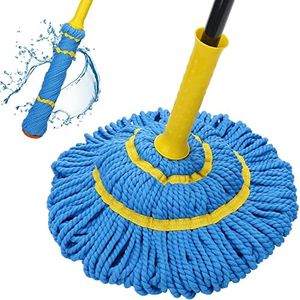
Twisting MechanismThe twisting mechanism in a twist mop is what allows you to wring out excess water without touching the mop head directly. This can be done by twisting the handle or using a built-in wringer. Some mechanisms are simple and manual, while others are more advanced with effortless spin or squeeze features. If you have wrist or hand strength concerns or want a quicker process, a smoother or self-wringing mechanism is preferable. Testing how easy the twisting feels and how dry it leaves the mop head can guide you to the right fit for your routine.
Handle Length & MaterialThe handle affects comfort and control during mopping. Handle lengths vary, with adjustable options available. A longer handle suits larger spaces and will help you avoid bending, while a shorter one gives better control in tight spaces. Handles come in plastic, aluminum, or stainless steel; metal options tend to be sturdier and longer-lasting, while plastic handles are lighter. If you’re tall or want to avoid strain, go for adjustable or longer handles; if you value lightweight or portability, a shorter or plastic handle may work.
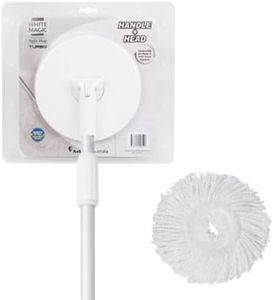
Mop Head Shape & SizeTwist mops mainly come with round or oval heads. The size and shape determine how much area you can clean at once and how easily you can reach into corners or under furniture. Larger heads clean big areas faster but might struggle with tight spots, while smaller ones provide better precision. Pick a mop size based on your room size: large heads for open spaces and small heads for tight or cluttered areas.
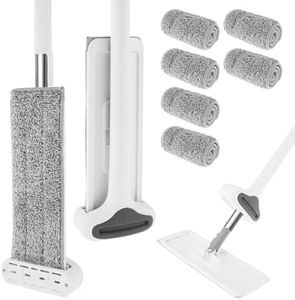
Replaceability & MaintenanceOver time, the mop head will wear out and need replacement. Some mops make it easy to detach and replace heads, while others are more complicated or even disposable. If you intend to use the mop often, easy and affordable replacement is key. Also, consider if the head is washable—machine washable heads save time and keep things cleaner. Think about your willingness to wash by hand, machine, or just swap out for a new head.