10 Best Two Wire Thermostats
From leading brands and best sellers available on the web.By clicking on a link to a third party's website, log data is shared with that third party.
Related Products
Recommended lists

Buying Guide for the Best Two Wire Thermostats
Choosing the right two-wire thermostat is all about matching the device to your heating system's requirements and ensuring that it delivers the level of control and comfort you need. Since two-wire thermostats are most commonly used with simple heating-only systems, it's important to consider both your system’s compatibility and your personal preferences for usability and features. Start by understanding what features matter most to you—like temperature accuracy, ease of use, and programmability—so you can narrow down your choices efficiently.System CompatibilitySystem compatibility refers to whether the thermostat will work with the type of heating system you have (such as a boiler, furnace, or baseboard heater). Two-wire thermostats are designed for simple, heating-only systems that do not require a 'common' wire or control air conditioning. This spec is crucial because the wrong type won't function correctly or could potentially damage your system. To choose correctly, check your heating system's manual or inspect your existing wiring to confirm you only have two wires and that your system doesn’t need extra features like cooling or fan control.
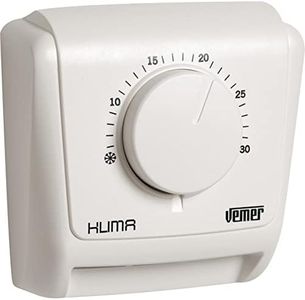
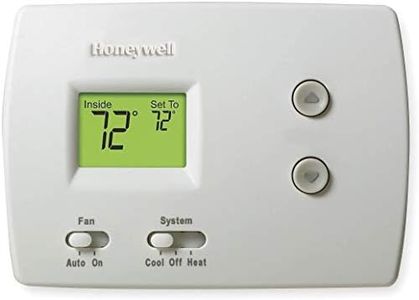
Type of Thermostat (Mechanical vs. Digital)The type of thermostat determines the way you set and read temperatures. Mechanical thermostats use physical dials or switches, while digital ones have electronic displays, often with push buttons. Mechanical units are generally simple and reliable but may be less precise in temperature control. Digital thermostats tend to be more accurate, easier to read, and sometimes offer extra conveniences like minimal programming. If you prefer a straightforward interface and don't mind some small temperature fluctuations, mechanical is fine. If you want clear temperature readouts and finer control, digital is the better pick.
Temperature Range and AccuracyTemperature range indicates the lowest and highest settings you can choose, while accuracy describes how closely the thermostat maintains your desired temperature. Wider temperature ranges are useful for unusual climates or specific needs, but most standard homes will be fine with typical ranges (e.g., 40°F to 90°F or 5°C to 32°C). Accuracy typically divides into basic (within 2-3 degrees), moderate (within 1 degree), or precise (within half a degree). Choose a model with good accuracy if you find temperature swings uncomfortable or if you want to optimize energy use.
Ease of InstallationEase of installation refers to how simple it is to remove your old thermostat and set up the new one. Two-wire thermostats are usually among the easiest to install, but design differences can matter, such as the clarity of labeling and whether mounting hardware is included. Some models use easy-to-follow color codes or tool-free terminals, while others require more effort. If you're a DIYer, look for a thermostat with clear instructions and simple wiring. If you are hesitant about installation, check if your choice is promoted as 'easy install' or 'DIY friendly.'
ProgrammabilityProgrammability is whether the thermostat lets you set schedules for when the heating system turns on or off automatically. Most basic two-wire thermostats are non-programmable—you adjust temperature manually. Some digital models offer simple scheduling (such as once-a-day changes) even for heating-only systems. If you have a predictable routine and want to save energy by reducing heating when you're away or asleep, a programmable thermostat is beneficial. If your schedule varies or you prefer to adjust temperature on the fly, a manual, non-programmable model may suit you best.