10 Best Under Sink Reverse Osmosis Systems
From leading brands and best sellers available on the web.By clicking on a link to a third party's website, log data is shared with that third party.
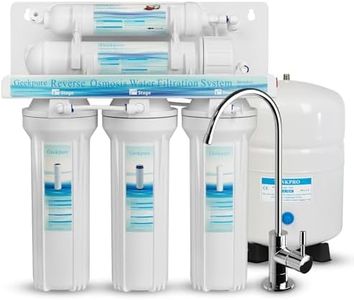
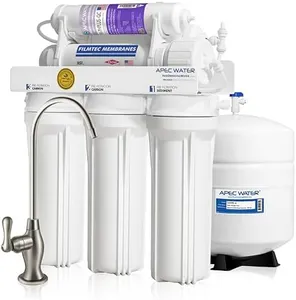
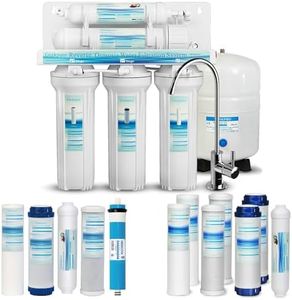
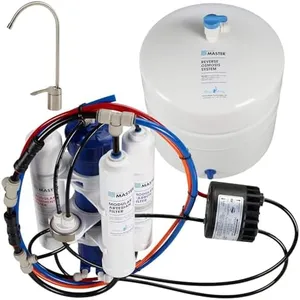

Related Products
Up to 17% off
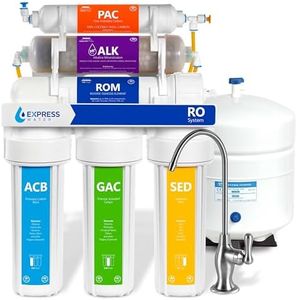
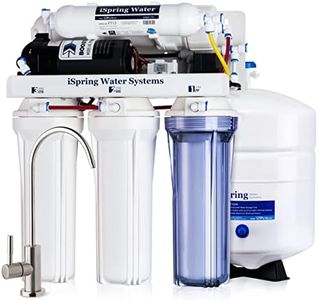
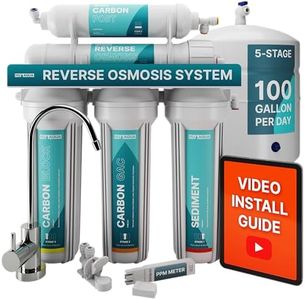


Buying Guide for the Best Under Sink Reverse Osmosis Systems
Choosing an under-sink reverse osmosis (RO) system can greatly improve the taste and quality of your drinking water. These systems work by filtering out impurities through a multi-stage process, removing things like chlorine, heavy metals, and contaminants that may be present in tap water. Before picking a system, it’s important to consider how much water your household uses, the level of filtration you need, available space under your sink, and how easy the system is to maintain. Understanding key specifications will help you match the system to your household's needs, ensuring you get pure water without unnecessary hassle or waste.Number of Filtration StagesThe number of filtration stages refers to how many separate filters the water passes through in the system. More stages often mean more comprehensive filtration, removing a wider range of contaminants. Systems usually have 3 to 7 stages. Basic systems might have three stages, filtering out larger particles, chlorine, and a few chemicals. More advanced systems with five or more stages can remove additional substances like heavy metals, bacteria, and enhance taste by remineralizing water. To pick the right number of stages, think about the water quality in your area and what you want to remove. If your water has complex issues or unpleasant taste, look for systems with more stages. For basic tap water improvement, fewer stages may suffice.
Filtration Capacity (Gallons per Day)Filtration capacity tells you how much purified water the system can produce in a day, usually measured in gallons per day (GPD). Mid-range systems provide 50–75 GPD, while higher-capacity ones go up to 100 GPD or more. If you have a small household or use RO water mainly for drinking and cooking, a lower-capacity system is enough. Larger families or those who want to use RO water for more purposes (like pet water or watering plants) should consider higher capacity models to avoid running out of purified water.
Tank SizeThe tank size refers to the amount of filtered water that can be stored and ready for immediate use. Tank sizes typically range from 2 to 4 gallons. A larger tank ensures you have enough filtered water even during peak usage times, but it also takes up more space under the sink. If your household uses a lot of water at once—for example, during meal prep or entertaining guests—a bigger tank might be best. For smaller needs or tight spaces, a compact tank could be a better fit.
Wastewater RatioThe wastewater ratio indicates how much water is wasted for every gallon of purified water produced. Typical ratios range from 1:1 to 4:1, meaning that for every gallon of RO water, one to four gallons may go down the drain as waste. Lower ratios are more efficient and environmentally friendly. If water conservation is a priority for you, or if you live in an area where water is scarce, look for systems with a low wastewater ratio.
Filter Change IndicatorA filter change indicator lets you know when it's time to replace the filters, maintaining water quality and system efficiency. Some systems have simple timer-based reminders, while others monitor actual filter usage. If you prefer low-maintenance solutions or worry about forgetting to change filters, a model with an indicator will make upkeep easier and help avoid declining water quality.
Ease of Installation and MaintenanceThis refers to how easy it is to install the system and replace or maintain its parts. Some RO systems are designed for simple DIY installation with quick-connect fittings, while others may need professional setup. Choosing a model with clear instructions and easily replaceable filters is ideal if you want to handle installation and maintenance yourself. If you’re not comfortable with plumbing, consider how much after-sales support or professional help you might need.
Remineralization StageSome reverse osmosis systems include a remineralization stage, which adds healthy minerals back into the purified water. This can improve taste and help balance water pH, which is sometimes lowered during the RO process. If you prefer water that tastes similar to spring water or are concerned about mineral loss, select a system with a remineralization filter. For users who like the ultra-pure taste of RO water, this stage may not be necessary.