10 Best V Mount Batteries
From leading brands and best sellers available on the web.By clicking on a link to a third party's website, log data is shared with that third party.
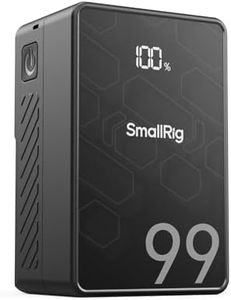
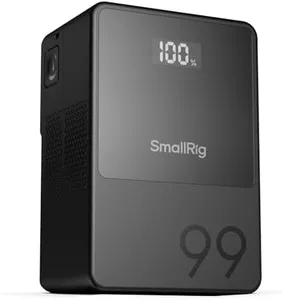
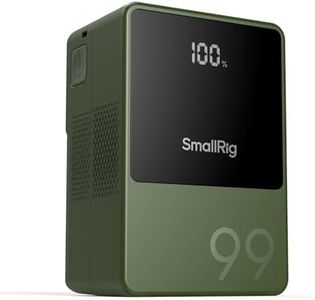
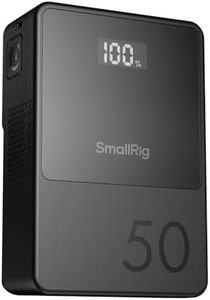
Related Products
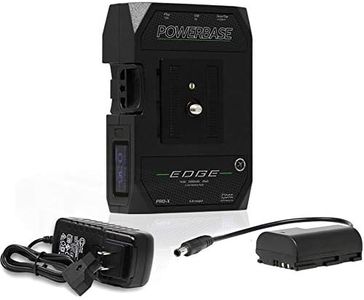
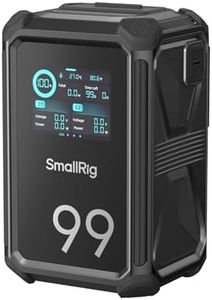
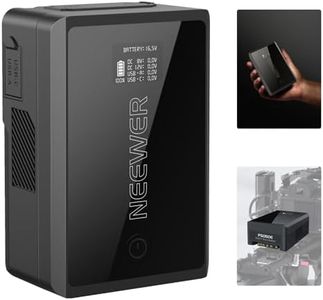
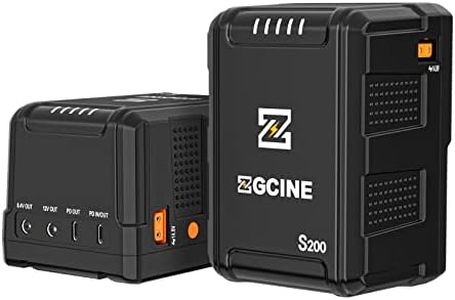
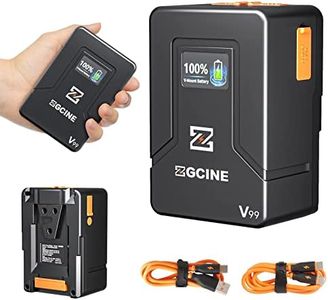
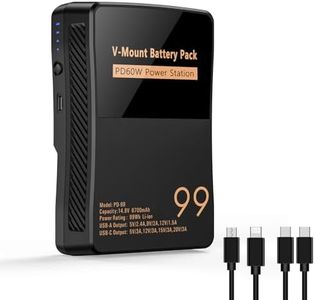
Buying Guide for the Best V Mount Batteries
Choosing the right V-mount battery can make a big difference in your video or photography workflow. These batteries are commonly used in professional cameras, lighting equipment, and monitors, providing long-lasting and reliable power in the field or studio. When selecting a V-mount battery, it’s important to consider your power needs, how long you’ll be shooting, your charging situation, and the devices you’ll connect. Understanding the key specifications will help you make the best decision and avoid running out of juice mid-shoot.Capacity (Wh or mAh)Capacity tells you how much energy the battery can store and is usually measured in watt-hours (Wh) or milliampere-hours (mAh). Higher capacity batteries will last longer before needing a recharge, which is especially important for long shoots or if you’re powering multiple devices at once. Small capacity batteries (around 50-100Wh) are great for shorter shoots and lighter setups, while medium capacities (100-150Wh) strike a balance for standard usage, and high capacities (150-300Wh or more) are aimed at extensive, all-day shooting. Think about how much equipment you’ll run at once and how long you need between charges to choose the best capacity for your workflow.
VoltageMost V-mount batteries operate between 14V and 16.8V when fully charged. Voltage must match the requirements of your equipment; too low or too high can damage your gear or simply not work. Most cameras and lights standardized for V-mount batteries handle this range well. Always check your devices’ voltage input—if you use sensitive gear or devices with strict power requirements, pick a battery that meets those exact needs.
Output PortsMany V-mount batteries come with extra outputs—like USB, D-Tap, or even USB-C—which let you power accessories or charge small devices directly. The more outputs and variety, the more flexible your setup becomes, but extra ports can add bulk. If you use monitors, wireless transmitters, or need to charge a phone on set, look for batteries with the right ports. For simple needs, extra outputs may not matter, but for run-and-gun or accessory-heavy shoots, they’re a big help.
Weight and SizeLarger capacity batteries are heavier and bulkier, which can affect your rig’s comfort and balance. Light, small batteries are better for handheld or gimbal setups, while bigger, heavier batteries are fine for tripod work or as backup power. Think about how much you move during shooting: if you’re on your feet a lot or using small rigs, go for lighter models; for stationary setups, size and weight are less of an issue.
Charge TimeCharge time indicates how long it takes to fully recharge the battery. Faster charging means less downtime but may require a special fast charger. Slow-charging batteries might only need standard chargers but could take several hours. If you have tight shooting schedules or need to manage multiple batteries in a day, fast-charging capabilities can be a game-changer; otherwise, regular charge times might suffice if you have plenty of batteries to rotate.
Battery Life CycleBattery life cycle refers to how many times the battery can be recharged before its capacity starts to noticeably drop. Professional V-mount batteries often last for several hundred to a few thousand cycles. If you shoot frequently or rely on the same batteries for years, look for higher life cycles. For occasional use, standard cycle counts may be enough.
Built-in Display or IndicatorsSome V-mount batteries have built-in displays or indicator lights to show remaining power, cycles, or voltage. This helps you plan your shoots without guessing when to swap batteries. If you value convenience and need precise monitoring, opt for batteries with clear displays; if you prefer simplicity or have backup batteries ready, this may be less crucial.