10 Best Vinyl Players For Beginners
From leading brands and best sellers available on the web.By clicking on a link to a third party's website, log data is shared with that third party.
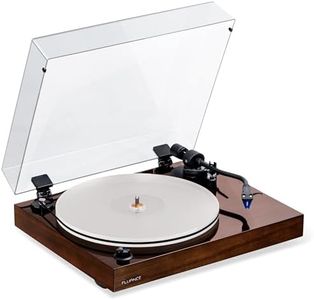
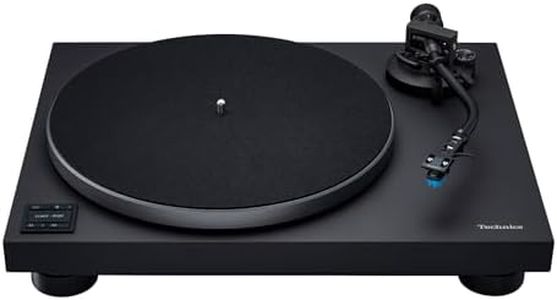
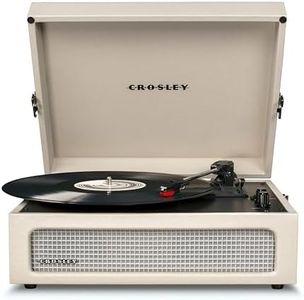
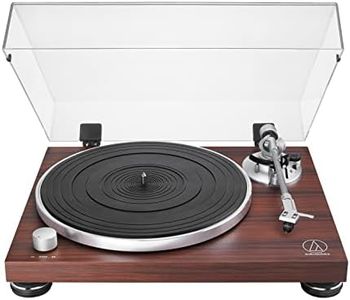
Related Products
Up to 19% off
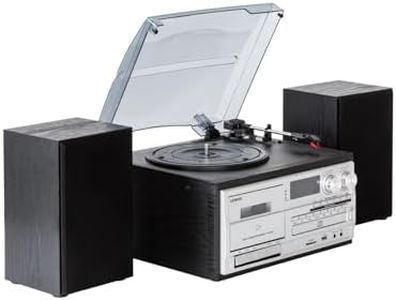
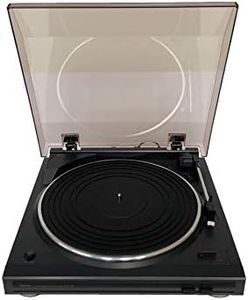
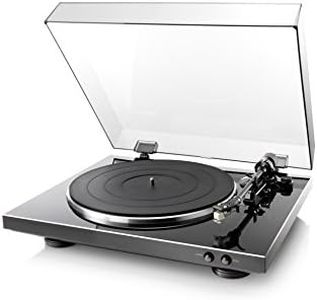
Buying Guide for the Best Vinyl Players For Beginners
Choosing a vinyl player as a beginner can be very exciting, but it's easy to get lost in all the features and specifications. A good approach is to think about how you'll use your record player, what kinds of music you want to enjoy, and how much convenience you want in your setup. Start with a clear idea of your goals, whether it's simply enjoying music at home, learning about audio equipment, or building a collection. Remember, the 'best' vinyl player is the one that fits your needs and helps you enjoy your records comfortably and reliably.Drive TypeDrive type refers to how the vinyl player's platter (the part the record sits on) is powered. There are two main types: belt drive and direct drive. Belt drive uses a rubber belt to spin the platter, often resulting in less vibration and a smoother sound, which is good for home listening. Direct drive connects the motor directly to the platter, giving more consistent speed and making it easier to start and stop quickly, which is useful for DJs or if you want to experiment with manual controls. For most beginners, a belt drive is a simple, reliable choice focused on good sound quality, while direct drive is better if you're interested in DJ techniques or want a sturdier, more hands-on player.
Built-in PreampA preamp boosts the tiny signal from your turntable so it can connect to speakers or amplifiers. Some vinyl players have a built-in preamp, which means you can connect the player directly to powered speakers or most home stereos without extra gear. Players without a built-in preamp need you to buy one separately or to have an amp that already includes one. Beginners often find built-in preamps much easier for setup, but if you want to upgrade your sound later, a model without a built-in preamp gives more flexibility.
Automatic vs Manual OperationThis describes how much work you need to do to play a record. Automatic players lower the tonearm onto the record and lift it at the end, which prevents accidental scratches and is easier for new users. Manual players require you to lift and place the tonearm yourself, giving you more control but requiring a steadier hand. Semi-automatic players offer a mix of both. If you’re just starting or prefer convenience, automatic is a safe bet, but if you want to learn and engage more with the process, a manual deck is more hands-on.
Speed SettingsVinyl records come in different speeds, most commonly 33 1/3 RPM and 45 RPM, and occasionally 78 RPM for older records. The turntable must be able to play at the speed your records require—most modern players handle at least 33 and 45, but 78 is less common. Think about what records you have or plan to collect; if you’re getting standard albums and singles, 33 and 45 are most important. A player with all three speeds is more versatile, but for most beginners, 33/45 RPM is enough.
Cartridge and Stylus TypeThe cartridge and stylus (needle) are the parts that touch the record and read the music. Better quality cartridges and styluses play records more accurately and last longer. Some players come with a built-in, non-replaceable cartridge, while others let you upgrade or replace these parts. For simple listening, the included cartridge is fine, but if you plan to stick with the hobby, choosing a model that allows upgrades will let you improve sound quality over time.
Output OptionsThis refers to how the player connects to speakers or amplifiers. Most common outputs are RCA (analog), phono (requires a preamp), or modern digital connections like USB. USB outputs let you digitize your records, which is handy if you want to make digital copies of your vinyl. For basic home listening, RCA outputs are usually enough. If you want to connect to a computer or future-proof your setup, check for USB or additional outputs.