10 Best Walking Pad Treadmills
From leading brands and best sellers available on the web.By clicking on a link to a third party's website, log data is shared with that third party.
Related Products
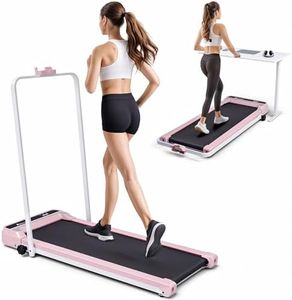
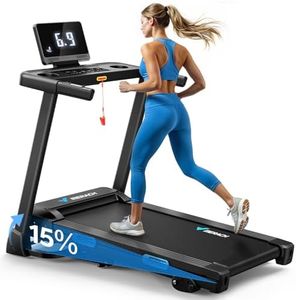
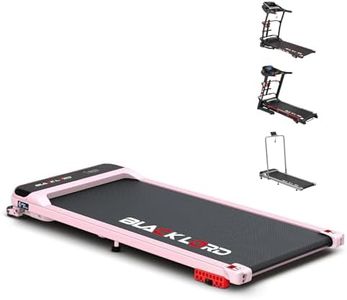
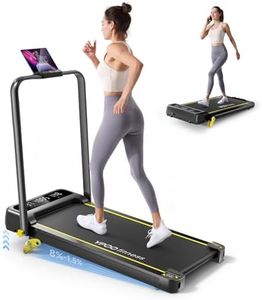
Buying Guide for the Best Walking Pad Treadmills
Choosing the right walking pad treadmill is all about finding the model that fits your lifestyle, available space, and intended use. Walking pads are a great solution for staying active at home or in the office, especially if you want something compact and convenient. When shopping for a walking pad treadmill, it's important to look beyond just the brand and appearance—focus on specific features that impact your daily experience. Understanding these key specifications will help you pick a treadmill that supports your goals, whether that's occasional slow walks while working, or more regular and brisk exercise.Motor PowerMotor power determines how smoothly and efficiently your treadmill operates, and it's usually measured in horsepower (HP). A more powerful motor can support higher speeds and longer usage periods without overheating. For walking pads, motor power often ranges from 1.0 to 2.5 HP. Lower values (around 1.0-1.5 HP) are suitable if you're only planning gentle walks or have lighter usage. Motors in the upper range (2.0 HP and above) are better if you walk briskly, use the pad for extended periods, or if multiple people plan to use it regularly. Consider how frequently and intensely you plan to walk—a casual user can go for a lower HP, while a regular walker will benefit from a more robust motor.
Speed RangeSpeed range tells you the minimum and maximum pace the walking pad can reach, generally measured in kilometers per hour (km/h) or miles per hour (mph). Most walking pads start at very slow speeds, perfect for gentle movement—this could be as low as 0.5 km/h. Maximum speeds might range from about 4 km/h for basic models, up to 8 km/h for faster walking or light jogging. If you intend to use the walking pad only for slow walks while working at a desk, a lower maximum speed is fine. But if you plan to pick up the pace or share the treadmill with others who walk faster, look for a wider speed range.
Running Belt SizeThe size of the running belt refers to the length and width of the area you walk on. A larger belt gives you more room to move comfortably and can feel safer, especially if you take longer strides or want some extra security. Smaller, more compact belts help save space but might feel cramped for taller people or those with longer strides. If you're petite and mainly walking slowly, a shorter and narrower belt can work well. If you're taller or want freedom of movement for faster walking, look for a longer and wider belt for comfort and stability.
Foldability and StorageFoldability describes how easily you can store the treadmill when it's not in use. Some walking pads fold flat to slide under furniture, while others stand upright in a closet. Consider where you plan to store it between uses—under a sofa, in a closet, or against the wall. If space is tight and portability is important, prioritize models that are lightweight and have a slim profile when folded. If you have a dedicated space to leave the pad out, this feature might be less important to you.
Weight CapacityWeight capacity tells you the maximum user weight the walking pad can safely support. Typical ranges are from 90 kg (about 200 lbs) on light models up to 120 kg (around 265 lbs) for sturdier ones. It’s important to choose a treadmill that comfortably supports your weight to ensure safety and long-term durability. If you’re close to the listed limit or multiple people with varying weights will use it, pick a model with a higher capacity.
Noise LevelNoise level refers to how loud the treadmill is during use. Quieter pads are ideal for shared spaces, apartments, or if you plan to walk during work calls or while watching TV. Noise is usually related to motor quality and construction—lower decibel (dB) ratings mean a quieter experience. If a quiet environment is a priority, look for reviews and descriptions mentioning 'quiet operation' or specific noise levels, especially if you’ll use it in a noise-sensitive setting.
Control and Display FeaturesControl and display features include how you adjust speed and see stats while walking—this might be through remote controls, smartphone apps, or on-device touch panels. Displays may show your speed, steps, time, and calories burned. Simple controls are easier if you just want a basic experience, while more advanced pads may sync with fitness apps or offer multiple tracking options. Decide if you prefer convenience and simplicity, or if you're motivated by more detailed progress tracking and smart features.