10 Best Watercolor Paper
From leading brands and best sellers available on the web.By clicking on a link to a third party's website, log data is shared with that third party.

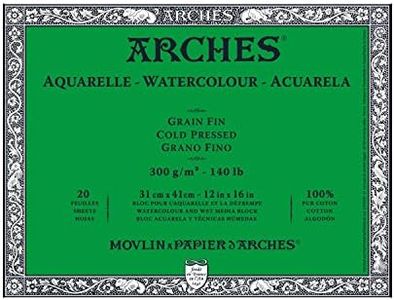
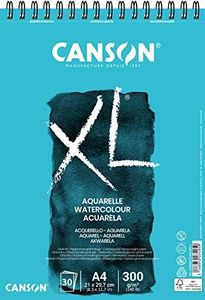
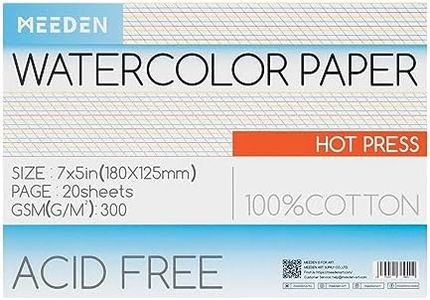
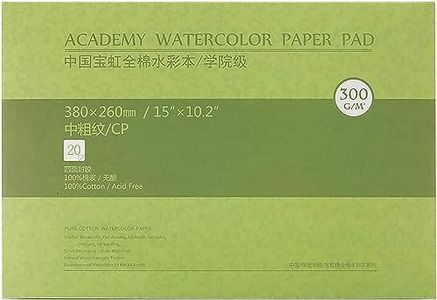
Related Products
Up to 10% off
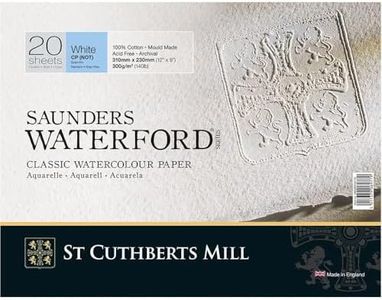
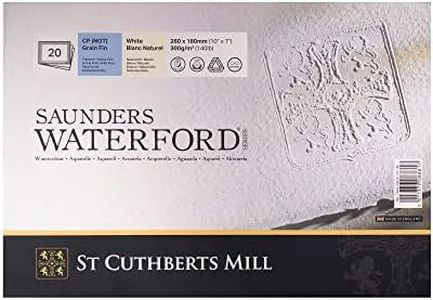
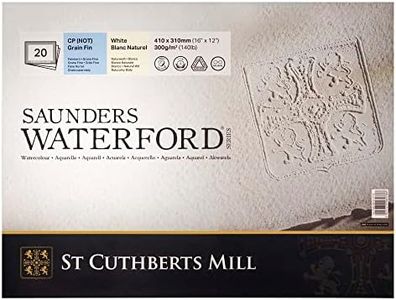

Recommended lists


Buying Guide for the Best Watercolor Paper
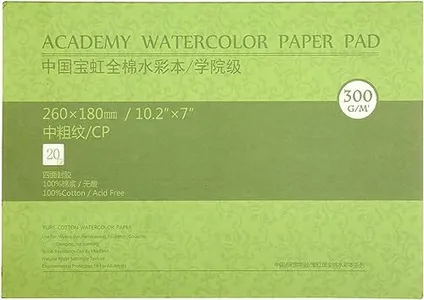
Choosing the right watercolor paper is crucial for getting the best results with your watercolor paintings. Watercolor paper comes in various forms, each affecting how the paint looks, how easy it is to work with, and its durability. Understanding the key specifications will help you select the paper that matches your painting style and personal needs.Paper WeightPaper weight tells you how thick and sturdy the sheet is, usually measured in grams per square meter (gsm) or pounds (lb). Heavier paper (like 300 gsm/140 lb or above) is less likely to buckle or warp when you add water, making it great for lots of wet techniques. Medium weights (around 200–300 gsm) are more affordable, but may need to be stretched before use to avoid wrinkling. Lightweight papers (below 200 gsm) are best for dry techniques or quick sketches. If you use lots of water and layering, go for heavier paper; lighter work or practice can be done on thinner sheets.
Surface TextureSurface texture, often called 'finish,' can be rough, cold press (sometimes called NOT), or hot press. Rough paper has a bumpy texture, which creates a grainy effect and is great for dramatic washes or texture effects. Cold press has a moderately textured surface, balancing detail and wash, making it a versatile and popular choice for most artists. Hot press is very smooth, ideal for fine detail and illustrations. Choose texture based on your painting style: lots of detail means hot press, a mix works well on cold press, and large, expressive washes shine on rough.
Material (Cotton vs. Cellulose)Watercolor paper is usually made from cotton, wood pulp (cellulose), or a mix. 100% cotton paper is the top choice for professionals: it’s absorbent, strong, and handles water beautifully without breaking down. Cellulose is more budget-friendly and fine for practice or beginners, but may not perform as well with heavy washes. Mixed papers combine both qualities. Think about longevity and performance: use cotton for your best work or when you want the paint to behave its best, cellulose can be fine for exercises and experimenting.
Form (Sheets, Pads, Blocks, Rolls)Watercolor paper comes in sheets, pads, blocks, and sometimes rolls. Sheets are large, loose pieces for custom sizes. Pads are bound stacks, easy for practice or classes, with sheets you remove after painting. Blocks are stacks of sheets glued on all sides; they don’t need stretching and stay flat while you paint, helpful when working with lots of water. Rolls are for oversized work. Choose the form that matches your workflow: blocks for convenience and staying flat, pads for portability, and sheets for flexibility.