10 Best Watercolor Papers
From leading brands and best sellers available on the web.By clicking on a link to a third party's website, log data is shared with that third party.

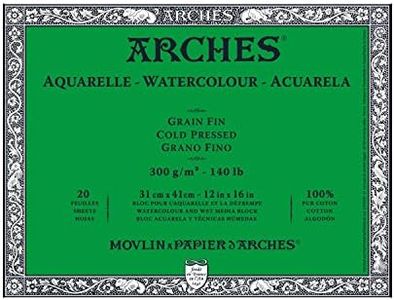
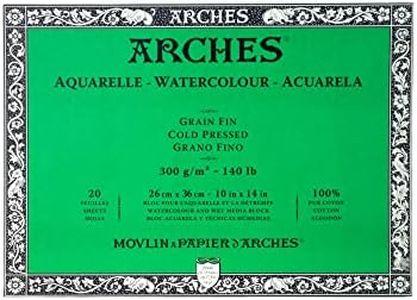
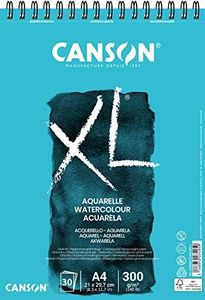
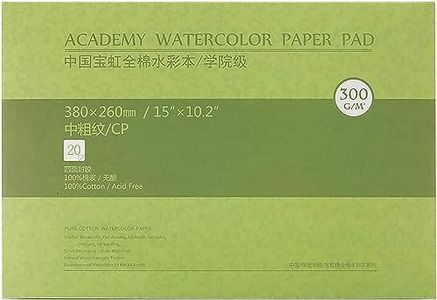
Related Products
Up to 33% off
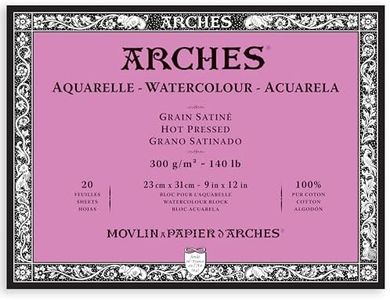

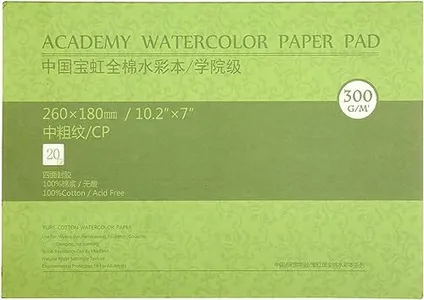
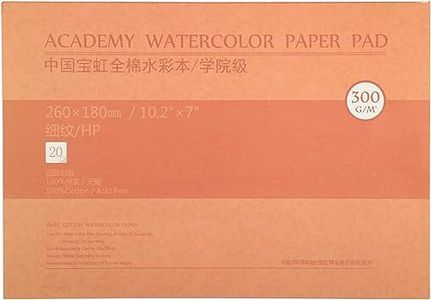
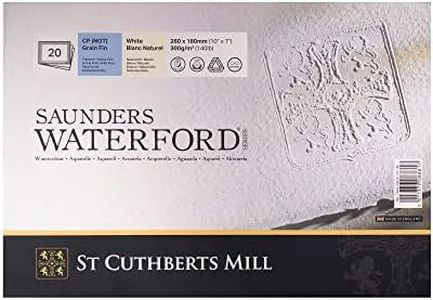
Buying Guide for the Best Watercolor Papers
Choosing the right watercolor paper is crucial for achieving your best results in painting. The type of paper you select directly affects how paint behaves, how vibrant your colors look, and how easily you can use different watercolor techniques. A good approach is to consider how you paint, what techniques you use most often, and how much durability or texture you need. Knowing the key differences between various papers helps you pick the right one for your style and ensure you enjoy your creative process.Paper WeightPaper weight refers to how thick and substantial the paper is, usually measured in grams per square meter (gsm) or pounds (lb). Heavier papers are more robust and handle plenty of water without buckling, while lighter papers are thinner and more prone to warping when wet. Common choices are 190gsm (90lb), 300gsm (140lb), and 640gsm (300lb). If you use a lot of water or like to layer washes, a heavier paper will work better, as it stays flatter. For dry techniques or practice, lighter papers might suffice, but usually, 300gsm (140lb) is a safe general-purpose choice.
Paper Texture (Surface)The texture of watercolor paper is about how smooth or rough it feels to the touch, and it influences how paint and brush react. The three main types are hot pressed (smooth), cold pressed (slightly textured), and rough (very textured). Hot pressed paper suits detailed work and precise lines because the smooth surface keeps brushstrokes crisp. Cold pressed is the most versatile and popular, with enough texture for expressive effects without losing control, making it suitable for most painting techniques. Rough paper is best if you love bold, granulated washes and visible texture in your artwork. Pick the texture based on your style: detailed illustrators might prefer hot pressed, while expressive painters might lean toward rough.
Paper MaterialWatercolor paper is made from either wood pulp, cotton, or a blend. 100% cotton paper is considered the best for quality because it’s more absorbent, durable, and allows washes to blend beautifully. Wood pulp papers are more affordable but less resilient—they can buckle more and colors might not look as vibrant. For serious painting or finished artwork, cotton is highly recommended. For beginners or practice, wood pulp paper can be a good start, but be aware it behaves differently and can limit your techniques.
Format (Pads, Blocks, Sheets, Rolls)Watercolor papers come in several formats: pads (glued on one side), blocks (glued on all sides), individual sheets, and rolls. Pads are convenient for quick sketches and easy removal, but often require taping down the paper to prevent warping. Blocks keep the paper flat while you work, because they are glued on all four sides, which is great for heavy washes and larger works. Sheets and rolls let you choose your own size or have complete control, but might need stretching or taping to work flat. Your choice depends on your working style: casual experimenters might like pads, plein air or serious painters may prefer blocks, and those working in large formats might choose sheets or rolls.
Acid-Free and Archival QualityAcid-free and archival quality means the paper is designed not to yellow or deteriorate over time, preserving your artwork for years. Acid in paper reacts over time and makes the paper brittle or discolored. If you are creating art to keep, exhibit, or sell, look for these terms to ensure your work stands the test of time. For quick practice, this may be less critical, but for anything you want to last or frame, always choose acid-free, archival-quality paper.