We Use CookiesWe use cookies to enhance the security, performance,
functionality and for analytical and promotional activities. By continuing to browse this site you
are agreeing to our privacy policy
10 Best Watercolor Sketchbook
From leading brands and best sellers available on the web.By clicking on a link to a third party's website, log data is shared with that third party.
Related Products
Up to 29% off

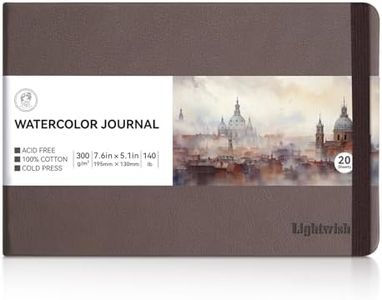
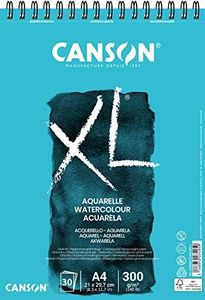


Buying Guide for the Best Watercolor Sketchbook
Choosing the right watercolor sketchbook can greatly improve your painting experience and results. Instead of picking the first one you see, it’s helpful to understand certain features that affect how watercolors behave on the paper, the durability of your work, and your overall satisfaction. Knowing what makes each sketchbook different puts you in control of finding one that feels enjoyable to use and matches your artistic needs.Paper WeightPaper weight tells you how thick and heavy each page is, which matters a lot for watercolor painting. Thicker paper (often measured in grams per square meter/gsm or pounds/lb) can handle more water and paint without buckling or tearing. Sketchbooks usually range from lightweight (90-140 gsm), medium weight (200-250 gsm), to heavyweight (300 gsm and above). Lightweight pages may wrinkle easily with lots of water, so they're better for light washes or sketching. Medium weight suits most casual painting and some layering, while heavyweight is best for extensive washes, lots of layers, or heavy use. Pick according to how much water you use—if you paint wet and like bold backgrounds, go for higher weight; if you do quick, dry sketches, lighter can be fine.
Paper Texture (Surface)The texture, or 'tooth,' of watercolor paper affects how the paint spreads and how your brush feels on the surface. Papers can be hot-pressed (smooth), cold-pressed (medium texture), or rough. Smooth paper lets you draw details easily and is great for pen-and-wash styles, but might not hold as much pigment. Cold-pressed is the most versatile and works well for most watercolor techniques, offering a balance between detail and texture. Rough paper has the most tooth, making paint settle into grooves for interesting effects, but can be challenging for delicate lines. Think about the style of your art and choose a surface that matches—more texture if you like visible brushstrokes and techniques, smoother if you need fine details.
BindingBinding is how the pages are held together, affecting convenience and usability. Common types are spiral, stitched, or glued (like pads). Spiral binding lets the book lay flat and pages turn easily, which is handy for on-the-go sketching or if you want to work across two pages. Stitched bindings are often more durable and let you scan artwork without lines in the middle, but might not open flat. Glued pads often allow you to remove pages cleanly. Your choice depends on whether you want to keep your works together, work flat, or easily share sheets—pick what feels practical for you.
Paper ColorMost watercolor papers are white, but the shade can range from bright white to off-white or even slightly cream. This affects how colors look because whiter paper makes colors look more vibrant and cooler, while an off-white background gives your work a subtly softer, warmer feel. Consider what sort of finished look you prefer and what suits your style—choose bright white for clarity and boldness, or off-white for a mellow tone.
Size and PortabilitySketchbooks come in many sizes, from small pocket-sized ones to large studio books. Smaller books are portable and great for quick sketches or painting outdoors, while bigger ones give you more space for expansive work or detailed studies. If you paint on the move, a medium or small size is often convenient. If you prefer working at a desk or creating big paintings, a larger format might inspire you more. Think about when and where you paint most and pick a size that suits your habits.
Number of PagesThe number of pages determines how much artwork you can make in a single sketchbook. Fewer pages make the book lighter and easier to carry, while more pages let you document a bigger project or a longer phase of your art journey. If you use a sketchbook for daily practice, look for a thicker book. If it’s just for occasional outings or specific projects, fewer pages might be all you need.