10 Best Wedge Golf Club Sets
From leading brands and best sellers available on the web.By clicking on a link to a third party's website, log data is shared with that third party.
Related Products
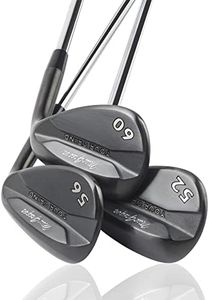
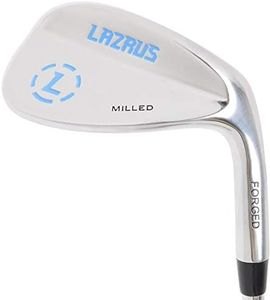
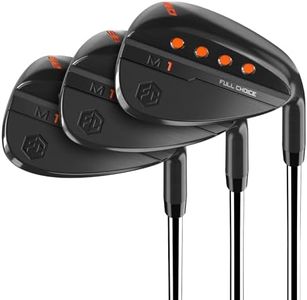
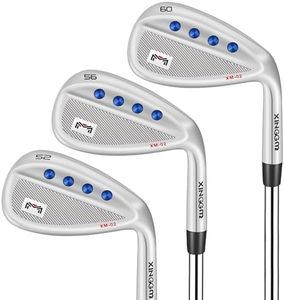
Buying Guide for the Best Wedge Golf Club Sets
Choosing the right wedge golf club set can greatly improve your short game and overall scoring in golf. Wedges are designed for high-precision shots close to the green, so understanding the different features and how they match your playing style and course conditions is key. When looking for a wedge set, focus on matching the types, lofts, bounce, sole grinds, and shaft materials to your skill level and the usual course conditions you play on. By learning what each of these specifications means and how they affect your play, you can pick a set that will help you get closer to the pin and lower your scores.Wedge TypesWedges come in several types: pitching wedge, gap wedge, sand wedge, and lob wedge. Each is designed for specific distances and situations. Pitching wedges are usually for full shots and chip shots close to the green; gap wedges fill the space between pitching and sand wedges in terms of distance; sand wedges are designed to help you get out of bunkers or soft sand; and lob wedges are for high, short shots that need to stop quickly. Think about which types you use most frequently or which shots you struggle with, and choose a set that covers those needs.
LoftLoft is the angle of the clubface that controls the trajectory and distance the ball travels. Wedges typically range from 45° to 64°, with higher lofts producing higher and shorter shots. Beginners or players unsure of their needs should aim for a mix that covers common distance gaps, while more advanced players may fine-tune their selection to specific distances or shot types. Consider how far you typically hit your irons and choose wedge lofts that create even spacing between clubs.
BounceBounce is the angle between the leading edge and the lowest point of the sole. It helps prevent the wedge from digging into the ground or sand. Low bounce wedges (4–8°) are good for firm turf or sand and for players with a shallow swing. Medium bounce (8–12°) is versatile, suiting a variety of turf conditions and swing types. High bounce (12° and above) is best for soft turf or bunkers and players with a steeper swing. Consider your most common course conditions and your swing style to choose the right mix.
Sole GrindSole grind refers to the shaping of the wedge’s sole, affecting how the club interacts with the turf. Different grinds allow you to open or close the clubface for creative shots. Simple soles work well for straightforward swings and full shots, while specialized grinds provide more versatility for varied lies or bunker play. If you play diverse courses or like to experiment with shot types, a set with multiple grinds may suit you best, but beginners may prefer a more standard, forgiving grind.
Shaft Material and FlexWedge shafts are usually steel for control and consistency, though graphite options exist for lighter weight and higher swing speed. Flex refers to how much the shaft bends during the swing—most wedges have a standard (wedge) flex designed for accuracy over distance. If you prefer a lighter feel or need to match other clubs in your set, graphite may be helpful, but for most players, standard steel shafts offer the needed precision and feedback.
Clubhead FinishWedge heads come in a range of finishes such as chrome, matte, or raw. The finish affects the club’s appearance, glare reduction, and, in some cases, spin performance as the clubface ages. If you play in bright sunlight, a matte or darker finish can help reduce glare. Personal preference plays a major role here, so choose a finish that looks good to you and fits the playing environment.