8 Best Weed Killers For Flower Beds
From leading brands and best sellers available on the web.By clicking on a link to a third party's website, log data is shared with that third party.
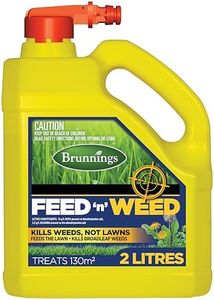
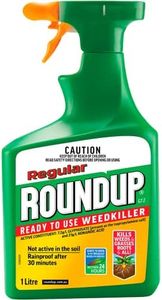
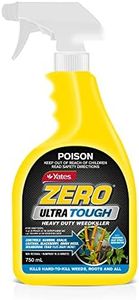
Buying Guide for the Best Weed Killers For Flower Beds
Choosing the right weed killer for your flower beds is all about protecting your plants while effectively tackling unwanted weeds. Since flower beds are home to desirable and often delicate plants, you’ll need to weigh the safety for your flowers alongside the effectiveness against the weeds you want to eliminate. It's important to read labels, understand how different products work, and determine which formula suits your gardening needs. Before making a choice, think about whether you want something fast-acting, long-lasting, or safe for certain plant species.SelectivitySelectivity refers to whether a weed killer targets all plants or just specific types. Selective weed killers are designed to kill weeds but leave your desired flowers unharmed, which is particularly important in flower beds. Non-selective weed killers get rid of any plant they come in contact with, which is riskier for use around flowers. If your flower bed is densely planted or contains valuable plants, a selective formula is usually safest. For spot treatment of isolated weeds where you can avoid spray drift, non-selective products can be effective, but use them with caution.
Type of Action (Contact vs. Systemic)Contact weed killers work by killing only the parts of the plant they touch, making them ideal for annual weeds or when you need fast visible results. Systemic weed killers are absorbed and travel throughout the weed, wiping out roots as well, which is more effective against perennial weeds but might take longer to see results. If weeds in your flower bed tend to come back repeatedly, a systemic option is more thorough. For quick cleanups of visible surface weeds, contact types do the job.
Residual EffectThis spec means how long the weed killer remains active in the soil after application. Some kill only the weeds present at the time (no residual), while others prevent new weeds from germinating for weeks or months (long residual). If you want to plant new flowers soon, it’s safest to go with a non-residual product so as not to harm future plantings. A residual formula can be handy if you want ongoing protection and don’t plan to reseed or rearrange your flower bed soon.
Application MethodWeed killers come as sprays, granules, or concentrates that you dilute. Sprays allow for precise spot treatment, which is good for targeting individual weeds among flowers. Granules offer easier, broader coverage but are less exact. Concentrates require mixing but can be cost-effective for larger beds. Choose a method that matches your comfort level and the size and density of your flower beds.
Safety for Pets, Children, and PollinatorsThis aspect indicates how toxic or safe the product is if pets, children, or beneficial insects like bees are present. Some weed killers can leave harmful residues, while others are formulated to be gentle or break down quickly. If your garden is frequently visited by pets or children, or you want to protect pollinators, look for products labeled as pet-safe, child-safe, or pollinator-friendly and always follow safety guidelines for application.