10 Best Wide Angle Binoculars
From leading brands and best sellers available on the web.By clicking on a link to a third party's website, log data is shared with that third party.
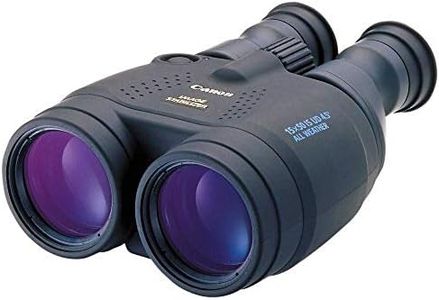
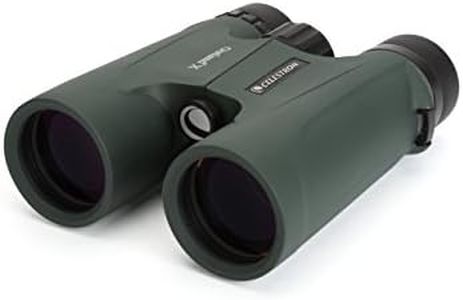
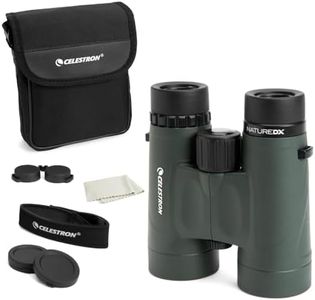
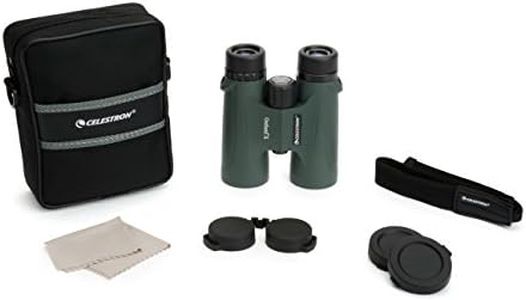
Related Products
Up to 47% off

Recommended lists

Top rated
Binoculars
Buying Guide for the Best Wide Angle Binoculars
Choosing the right wide-angle binoculars can make a big difference in how much you enjoy observing nature, sports, or any outdoor activities. Wide-angle binoculars are popular for their broad field of view, allowing you to see more of the landscape at once. When deciding on a pair, it's important to understand the main specifications, as these will guide you toward the best fit for your needs and ensure you get the most out of your viewing experience.Field of ViewField of view, often measured in degrees or as width at a specific distance (like meters at 1,000 meters), tells you how wide the visible area is when you look through the binoculars. This is especially important for wide-angle binoculars, as a greater field of view lets you see more scenery at once, making it easier to track moving subjects or take in panoramic vistas. Typical field of view values can range from around 5 to over 8 degrees. For general nature watching or sporting events, a wider field of view is often more pleasurable and practical. If you want to spot birds in flight or keep up with fast action, prioritize a wider field.
MagnificationMagnification indicates how much closer the subject will appear compared to the naked eye, and is usually represented by the first number in binocular specs (like 8x or 10x). While higher magnification sounds appealing, it often narrows the field of view and can make the image shakier. Lower magnification (such as 7x or 8x) generally means a wider field of view, making it a better match for wide-angle purposes and easier to use without a tripod. Think about what you'll be observing: for landscape and group activities, lower magnification is ideal, while for distant details, slightly higher might suit you.
Objective Lens DiameterThe objective lens diameter, expressed in millimeters (the second number in specs, like 8x42), affects how much light the binoculars capture and how bright the image will appear. Larger lenses (e.g., 42mm or above) let in more light, which helps in low-light conditions like dawn or dusk. However, larger lenses mean heavier binoculars. For daytime use and casual observations, a moderate size (about 32mm to 42mm) is a good balance between portability and brightness. If you frequently use them in dim conditions, a larger lens is advantageous.
Eye ReliefEye relief measures how far your eyes can be from the eyepieces while still seeing the full field of view. It's especially important if you wear glasses. Longer eye relief (15mm or more) is generally more comfortable for most people and essential for glasses wearers to avoid a restricted view. If you use glasses, check for long eye relief; if not, you can get away with shorter measurements.
Prism TypeBinoculars come with different prism systems, primarily roof prisms or porro prisms. Porro prism binoculars often give a wider field of view and can deliver a more immersive image, which suits wide-angle needs. Roof prisms, on the other hand, are more compact and lightweight but sometimes offer a narrower field. Your choice here often comes down to whether you prefer traditional wide spacing with porro prisms or a more streamlined, modern shape with roof prisms.
Weight and SizeWeight and size affect how easy the binoculars are to carry and how long you can use them comfortably. Heavier, larger models might give you a brighter or wider image, but can be tiring during long use or while hiking. If you plan to carry your binoculars for extended periods, consider a lightweight design. For stationary observation, a bigger and heavier pair may be less of a concern.
Close Focus DistanceClose focus distance is how near you can be to an object and still see it clearly through the binoculars. If you are interested in observing nearby objects like butterflies or other small animals, a short close focus distance (2 meters or less) is useful. For wide-angle users focused on distant landscapes or action, this may not be as crucial, but it's helpful to know if you might want versatility.