10 Best Wood Water Sealers
From leading brands and best sellers available on the web.By clicking on a link to a third party's website, log data is shared with that third party.
Related Products

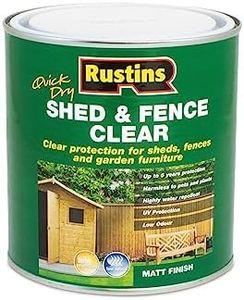
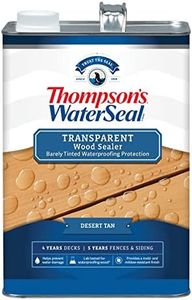
Buying Guide for the Best Wood Water Sealers
Choosing the right wood-water sealer is important to protect your wooden surfaces from water damage, UV rays, and general weathering. Whether you're sealing a deck, fence, furniture, or outdoor structure, the right sealer will extend the life of your wood and keep it looking good. The best approach is to understand your wood's exposure and maintenance preferences, then look at key features to find the product that best suits your particular needs.Type of SealerWood-water sealers come in different types, with the most common being clear sealers, semi-transparent stains, and solid stains. Clear sealers offer minimal color change while protecting against moisture but don’t offer much UV protection. Semi-transparent stains add a hint of color and improve UV shielding while still showing the wood grain. Solid stains provide the most color and protection, almost like a paint, and are best for older or highly weathered wood. The right choice depends on whether aesthetics, UV protection, or maintaining the wood’s natural appearance is most important to you.
Water ResistanceWater resistance refers to how well the sealer prevents water from penetrating the wood. Products range from basic water repellents to advanced waterproofing sealers. A higher level of water resistance is essential for areas exposed to heavy rain or constant moisture, such as decks or outdoor furniture. For sheltered wood, a basic water-repellent may be sufficient. Consider your local weather and how exposed the wood will be when making your choice.
UV ProtectionUV protection prevents the sun’s rays from fading or breaking down the wood. Some sealers include additives to block UV rays, which can help preserve the color and strength of the wood. If your wood is in direct sunlight for several hours a day, opt for a product with strong UV protection. If your wood is mostly in the shade, UV protection is less critical.
Durability and LongevityThis spec describes how long the sealer will effectively protect the wood before needing to be reapplied. Some products last a year, while others promise multi-year protection. If you want to minimize maintenance, look for longer-lasting formulas. However, wooden surfaces with heavy foot traffic or exposure to severe weather may require more frequent application, regardless of product claims.
Application MethodDifferent sealers can be applied with brushes, rollers, sprayers, or even rags. Some are easier to apply and clean up than others. Thicker products may need brushing, while thin, runny sealants can be sprayed or rolled. Consider your comfort with DIY projects and the size of the area you need to seal—larger areas might benefit from products that can be sprayed for quicker coverage.
Drying and Curing TimeDrying time refers to how quickly the sealer becomes touch-dry, while curing time is how long it takes to fully set and provide complete protection. Some sealers dry in a few hours but may take several days to fully cure. If you need to use the wood surface soon after sealing, look for fast-drying and curing products. Otherwise, plan your project to allow ample time for the sealer to fully set.
Toxicity and VOC LevelVOC (Volatile Organic Compounds) levels indicate the amount of harmful chemicals released during application and curing. Low-VOC and non-toxic products are safer for use around children, pets, and gardens. If you are sealing indoor wood, or are sensitive to smells and chemicals, prioritize low-VOC sealers. For outdoor use in well-ventilated areas, standard products may suffice if you take proper precautions.