10 Best Youth Football Gloves
From leading brands and best sellers available on the web.By clicking on a link to a third party's website, log data is shared with that third party.
Related Products

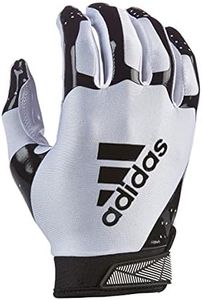
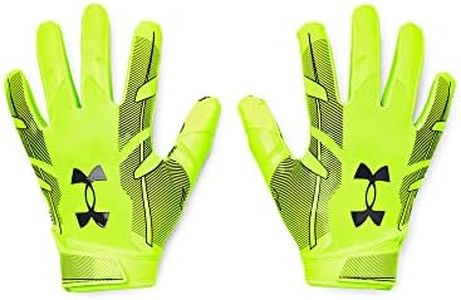
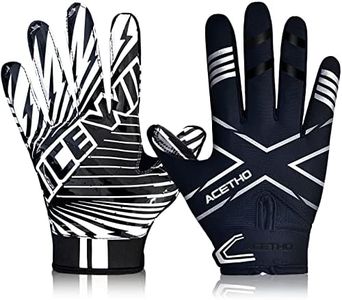
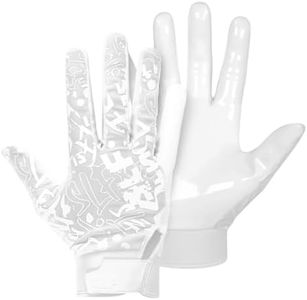
Buying Guide for the Best Youth Football Gloves
Choosing youth football gloves is important for enhancing a young player's grip, comfort, and confidence during games and practices. The right pair should suit the player’s position, hand size, and personal preferences. Pay attention to how the gloves fit, their grip, and the level of protection they provide. Trying different types and considering feedback from actual use can help in spotting the best fit. Remember, function and comfort should always come before looks, as the glove's primary job is to support the player's performance.Grip MaterialGrip material refers to what covers the palm and fingertips of the glove, and it's vital because it affects how well the player can catch and hold onto the ball. Most youth football gloves are made with sticky synthetic palms to maximize grip. There are various levels — some gloves offer a super sticky grip best for wide receivers who catch a lot of passes, while others have a more moderate grip suitable for running backs or defensive players who focus more on holding the ball tightly. If the player is mainly catching passes, a stickier grip is preferred, but if ball control or versatility is needed, choose a material with moderate stickiness that balances grip and durability.
Fit and SizeFit and size determine how comfortably the glove sits on the hand, which directly impacts the player's ability to perform. Gloves that are too tight can be uncomfortable and restrict movement, while gloves that are too loose can slip off or reduce the feel of the ball. Sizes are usually based on hand measurements. For game performance, most players benefit from a snug but not tight fit, which can be found by measuring the hand from the bottom of the palm to the tip of the middle finger. When choosing, consider that growing hands might need a slightly roomier fit, but never so much that control is lost.
Padding and ProtectionPadding and protection refer to the extra material or cushions built into certain parts of the glove, especially on the fingers and back of the hand. This is important for players who are more likely to get hit on their hands, such as linemen or defensive players. Padding can range from very minimal (for better flexibility) to thick and robust (for maximum protection). If the player is often blocking or tackling, select gloves with good padding. For receivers and running backs, minimal padding is often chosen to keep the glove light and agile. Always match this feature to how aggressive and contact-heavy the player’s position is.
Breathability and VentilationBreathability and ventilation involve how well air flows through the glove, helping keep hands cool and dry. Sweat can make hands slippery, reducing grip and comfort, so gloves with mesh panels or breathable fabrics are valuable for longer or intense play. Most gloves will have some form of ventilation, but there are differences; highly ventilated gloves are great for hot climates or sweaty hands, while less ventilated ones might feel warmer in cool weather. If your child tends to sweat a lot or plays in summer, prioritize gloves with plenty of ventilation.
Wrist ClosureWrist closure is the type of strap or fastening system that keeps the glove secure around the wrist. This is important because it affects security and comfort. There are basic elastic slips for quick on-off action, and there are adjustable straps for a tighter, custom fit. Adjustable closures offer more support and are less likely to come loose during play, which can be helpful for high-action players or those with smaller wrists. Choose the type that provides enough support without feeling restrictive, depending on how much movement your child’s position requires.