10 Best Bore Gauges
From leading brands and best sellers available on the web.By clicking on a link to a third party's website, log data is shared with that third party.
Related Products

Recommended lists

Top rated
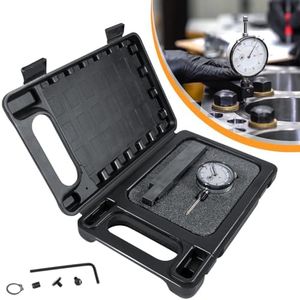
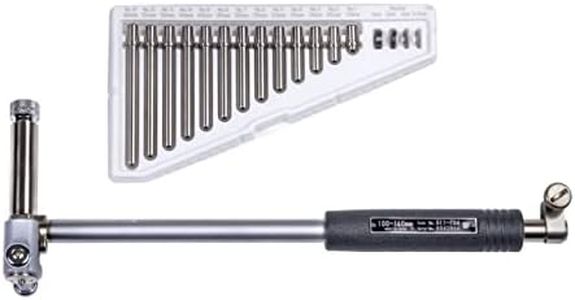
Cylinder Bore Gauges
Buying Guide for the Best Bore Gauges
Choosing the right bore gauge is important when you need to measure the internal diameter of holes or cylinders with accuracy. Bore gauges are tools that help you check for wear, out-of-roundness, or the internal size of different parts, commonly used in mechanical, engineering, and automotive settings. To find the best fit for your needs, it's important to first understand the job you have in mind—whether you need very high accuracy or just a quick check—because different bore gauges are designed for specific ranges, resolutions, and applications. Paying attention to a few key specifications will help you select a tool that matches your requirements and ensures reliable and repeatable results.Measuring RangeThe measuring range is the smallest and largest diameter the bore gauge can measure. This is crucial because the gauge needs to fit inside the bore you’re measuring while still providing accurate readings. Bore gauges come in different ranges—some might measure small holes like 6-10mm, while others can check much larger diameters up to several hundred millimeters. It's best to choose a bore gauge with a range that covers the sizes you plan to measure most often. For people who work on engines or machinery with standard sizes, picking a gauge that covers those common diameters makes things easier and avoids the need for multiple tools.
ResolutionResolution is the smallest difference in measurement that the gauge can detect, often shown in millimeters or inches (like 0.01 mm or 0.0005 inch). High-resolution gauges let you see tiny differences, which is important in precision work where even a small change can matter. Basic jobs like checking if a hole is generally on size may be fine with a lower resolution gauge, but tasks requiring tight tolerances—like engine rebuilding—need higher resolution. Choose a resolution that matches the accuracy level required by your projects; higher does not always mean better if you don't need it, but it does offer finer detail if your work demands precision.
Type of Gauge (Dial, Digital, or Telescopic)There are different kinds of bore gauges, such as dial bore gauges, digital bore gauges, and telescopic gauges. Dial and digital gauges show the measurement directly on a display, making them easier to read and more consistent for precise work. Telescopic gauges, on the other hand, need to be used with a separate micrometer to get the measurement, making them more affordable but requiring more skill and patience. If you’re looking for speed and accuracy, a dial or digital gauge might be better, while telescopic gauges are good for occasional checking or rough sizing. Your experience level, preference for digital readouts, and the frequency of use will help determine which type is right for you.
Contact Points and Tip MaterialThe contact points are the parts of the gauge that touch the inside of the bore. Their design and material affect measurement accuracy and tool lifespan. Hardened steel or carbide-tipped contacts are tougher and last longer, especially if you’re measuring hard metals regularly. The number and shape of contact points also play a role: more points may give more stability, but simple two-point contacts are faster for basic checks. If you often measure highly finished or delicate surfaces, smooth, high-quality contacts are vital to avoid scratching. Selecting the right contact materials and design depends on what you’re measuring and how often you’ll be using the tool.
Ease of Calibration and AdjustmentCalibrating a bore gauge means setting it to a known standard before measuring, which is essential for accurate readings. Some gauges have simple, tool-free calibration options, while others require more complicated setups. If you expect to use your gauge frequently or on different sizes, choosing one that's easy to calibrate will save time and reduce errors. For users who are new to bore gauges, simpler calibration methods are less intimidating and more reliable.
Readability and ErgonomicsA gauge that's comfortable to hold and easy to read reduces fatigue and mistakes. Clear markings, large dials, or backlit digital displays make readings faster and help prevent errors, especially in poorly lit workshops. If you'll be using the tool for long periods or in tight spaces, look for a bore gauge shaped for comfort and ease of operation. Overall, a gauge that's straightforward and fits your hand well improves both your results and your experience.