10 Best Pillow Cover For Allergies
From leading brands and best sellers available on the web.By clicking on a link to a third party's website, log data is shared with that third party.
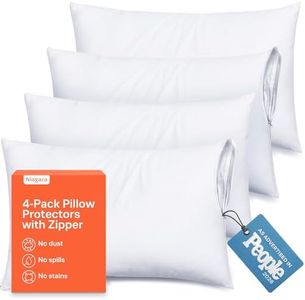
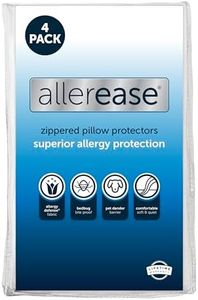
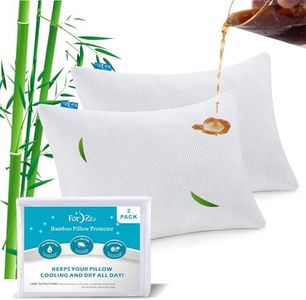
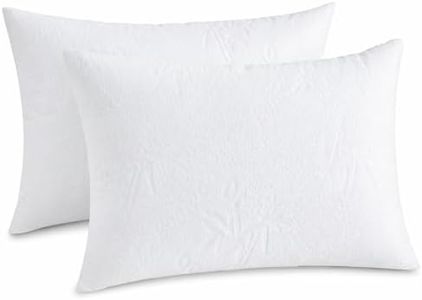
Related Products
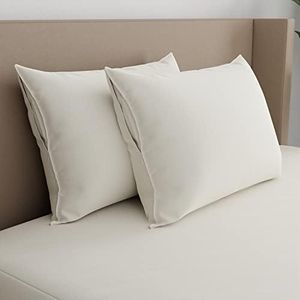
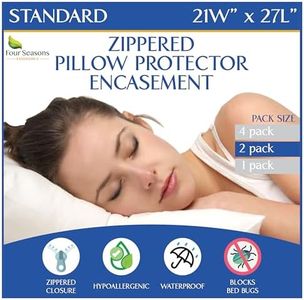
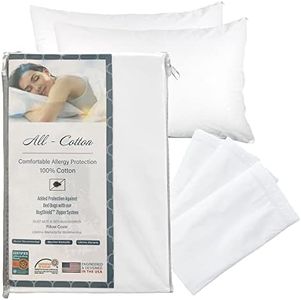
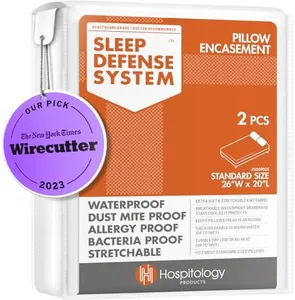
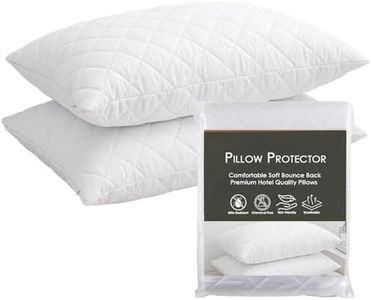
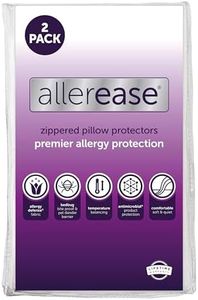
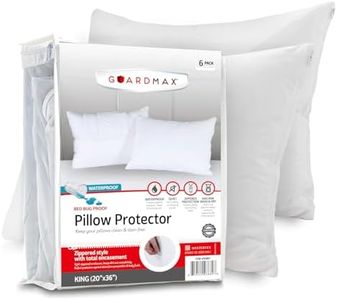
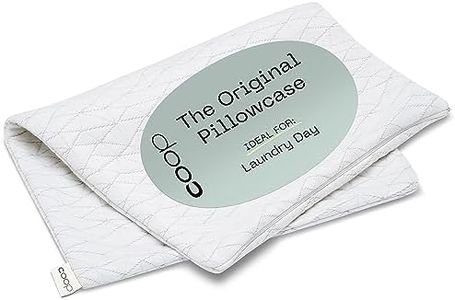
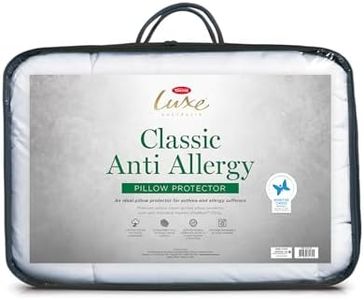
Recommended lists


Buying Guide for the Best Pillow Cover For Allergies
Choosing the right pillow cover for allergies is important for your comfort and health, especially if you suffer from allergic reactions to dust mites, pollen, or pet dander. The goal is to find a cover that acts as a barrier against allergens while also providing comfort through breathability and softness. It's worth paying attention to the material, how it's constructed, and how easy it is to keep clean. The right choice can improve your sleep quality and reduce allergy symptoms.Material CompositionThe material of a pillow cover influences both how it feels against your skin and how well it blocks allergens. Most allergy pillow covers are made from tightly-woven cotton, microfiber, or synthetic blends. These materials are important because they limit the passage of dust mites and their waste, a common cause of bedroom allergies. When choosing, look for fabrics described as hypoallergenic or allergen-barrier. Cotton is comfortable and breathable, which is great if you tend to get hot at night, while microfiber and other synthetics can offer an even tighter weave for greater protection. Consider what feels good for you and whether skin sensitivity is also an issue.
Weave Tightness (Micron Rating)The weave tightness or micron rating tells you how small a particle can pass through the fabric. This is crucial because the smaller the pore size (measured in microns), the less likely allergens like dust mites or pollen can get through and bother you. Covers with a rating of 2-5 microns offer the most protection, but even options up to 10 microns can block most dust mites. If your allergies are severe, look for the smallest micron rating. If they're mild, a standard hypoallergenic cover should be sufficient.
Closure TypeThe type of closure refers to how the pillow cover is sealed—most commonly by zipper, envelope fold, or Velcro. This is important because gaps in the closure can let allergens in. Zippered covers offer the most secure seal and prevent even tiny particles from entering or escaping the pillow, which is best if you have moderate to severe allergies. Envelope or flap closures are easier to use but may not be as effective for maximum protection, making them more suited for mild allergies or for use as a secondary barrier.
Ease of CleaningPillow covers need to be washed frequently to remove accumulated allergens and maintain hygiene. A cover that is machine-washable at hot temperatures (above 130°F or 54°C) is ideal, as heat kills dust mites and removes most allergens. If ease of care is important to you, pick a cover that can withstand regular laundering without losing its effectiveness or shape. Check the product care instructions before buying to be sure it fits your lifestyle.
Comfort and BreathabilityWhile protection is the priority, you don’t want to sacrifice a good night’s sleep. Some allergen-barrier covers can feel stiff or noisy, so choosing a cover that balances protection with softness and breathability is important. If you tend to sleep hot or have sensitive skin, focus on covers that mention air flow or cooling properties, and opt for softer fabrics like high-quality cotton. Comfort level is individual, so if possible, feel the material before purchasing or check if there’s a satisfaction guarantee.